
Beach Sand To Wooden Floor: Use Pallets!
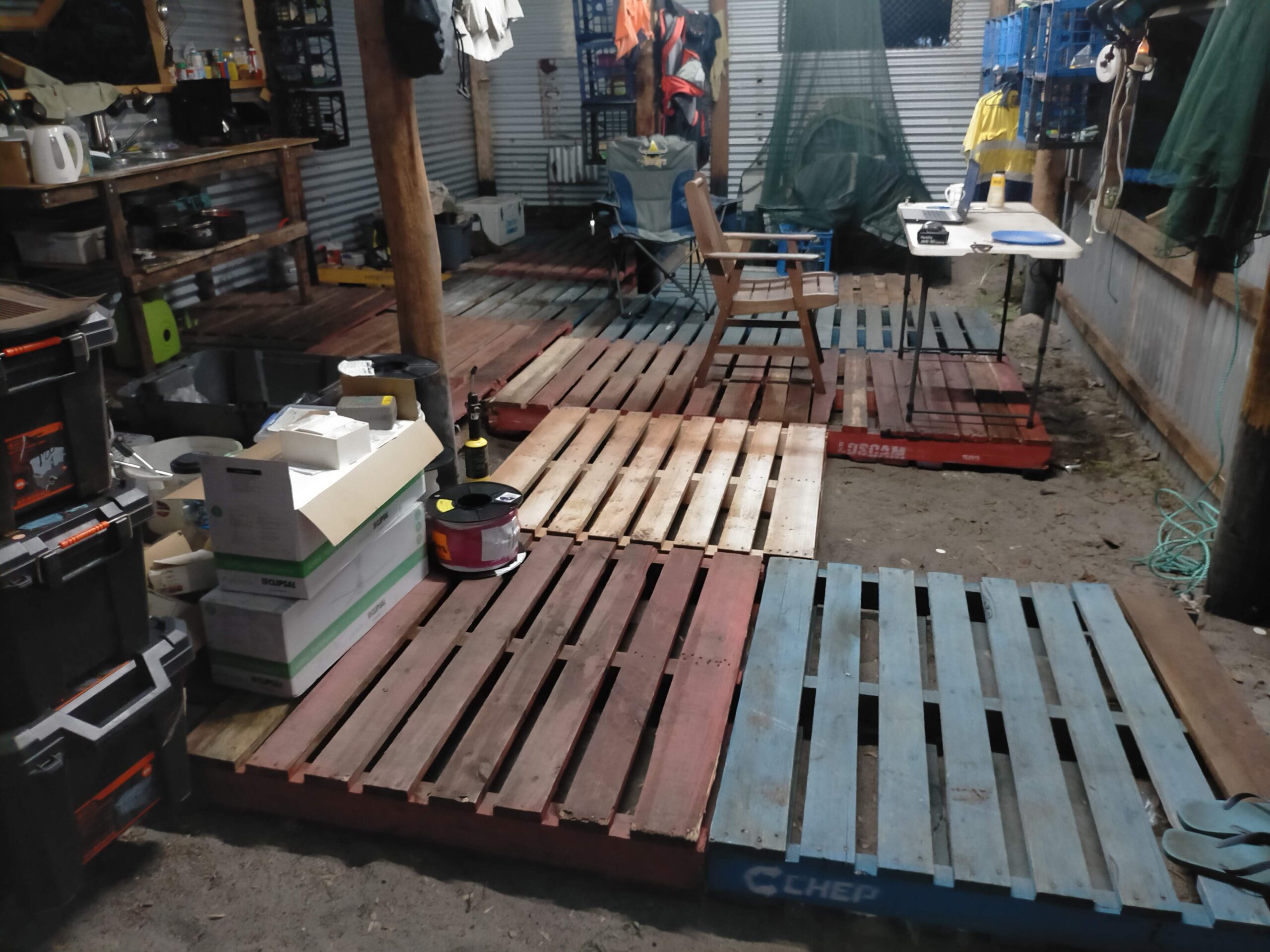
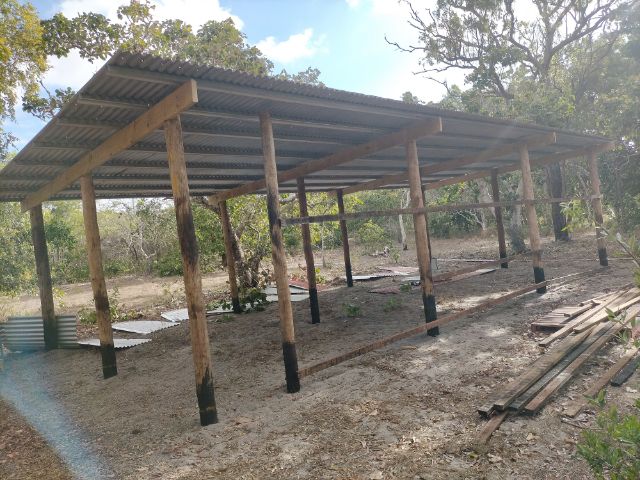
Living right on the coast up here on the Cape York Peninsula sounds like an absolute dream, doesn’t it? And look, waking up to the sound of the ocean within 100 metres of my shed is pretty hard to beat. But living that close to the beach comes with a pretty annoying downside: sand. Before I tackled this project, my 60-square-metre shed floor was nothing but raw sand and dirt. Walking inside meant slogging through the soft ground, tracking dust everywhere, and constantly fighting a losing battle against the grit. I desperately needed a solid floor underfoot, but pouring a massive concrete slab out here isn’t exactly cheap or easy. So, I did what any self-respecting off-grid bushie does—I got resourceful. I headed down to the local tip, scavenged a mountain of old commercial freight pallets, and built myself a solid, cheap “slab” underfoot. It might not look like a standard tiled floor when it’s done, but trust me, anything is better than living in a giant sandbox! In this article, I will discuss points such as:
- how I did it, step-by-step, using nothing but simple tools, old pallets, and a bit of bush ingenuity.
- The best pallets for shed flooring
- How to build a shed floor with pallets
The other couple of things I wanted to say about this article are that this is all about how I should have laid my pallet floor in hindsight! Sure, I have a sand-free shed floor now, and it makes all the difference in comfort. But looking back, if I did it all again,I would do it exactly how i have described in this post to end up with a better result. Lastly, my pallet floor base was laid in 2023/2024, and all of the treated pallets are still mostly solid today!
Get it level!
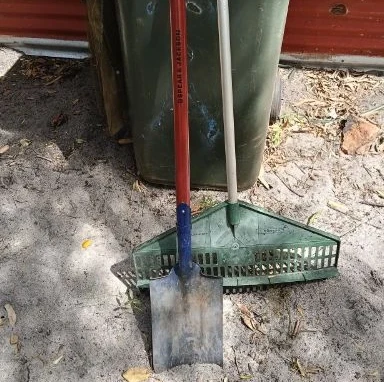
Before you can even think about laying a floor, you have to get the base/ ground flat and level.I grabbed my trusty rake and shovel and got to work leveling out the sand base. You don’t need fancy laser levels for this. You can absolutely level it by eye if you’ve got a good tracker’s vision, but I prefer a bit more accuracy. I used a long, solid straight edge—a metal concretor’s screed works perfectly for this—and taped a standard spirit level right to the top of it. I dragged the screed across the sand, knocking down the high ridges and shoveling extra sand into the low dips. Take your time with this part. The flatter your sand base is right now, the fewer headaches you’ll have with wobbly pallets later
Termite-Proof your floor
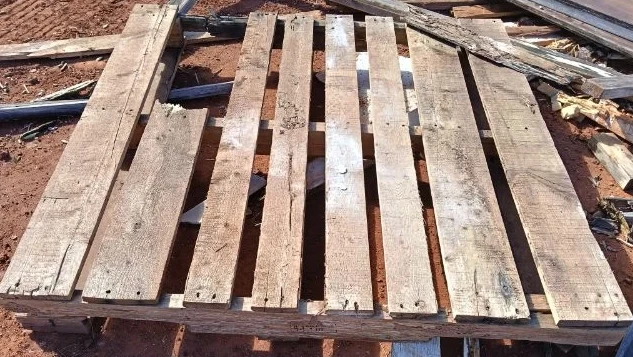
Out here in the bush, termites (white ants) are an absolute nightmare. If you lay raw, untreated timber directly onto beach sand, you are basically creating an all-you-can-eat buffet for every termite in the immediate vicinity. Within a year, your new floor will be pretty well chewed out and destabilised. To prevent this, you need to be picky with the type of pallet to use and also apply a classic bush-treatment trick: Pick the Right Pallets. First, make sure every single pallet you collect is the heavy-duty, hardwood commercial type. These are the more robust type used for commercial heavy freight operations, e.g. seaborne freight carrying everything from remote supermarket bulk orders to mining gear, and machinery. They are naturally dense, tough as nails, and can handle the weight of a floor. Avoid those flimsy, lightweight pine grocery pallets—they will rot and collapse under your feet in no time.
The Old Engine Oil Trick.
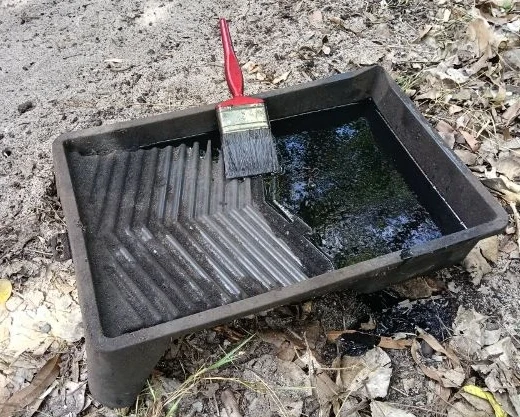
Next, I grabbed a 20-litre drum of old, used engine oil from the dump and pour it into a standard painter’s roller tray.
The Bush Termite-Proofing Setup
[ 20L Drum of Used Engine Oil ] ──> [ Painter's Roller Tray ] ──> [ Roll onto Pallet Underside ]
Using a paint roller and a thick brush for the corners, I heavily coated and soaked the underside of every single pallet I intended to use. This thick, nasty oil layer acts as a massive deterrent. Because these pallets are going to sit directly on top of the leveled sand, the engine oil soak, as well as existing pallet wood treatment, ensures the termites stay far away from your floor base.

Laying the Pallet Grid (The Tiler’s Trick)
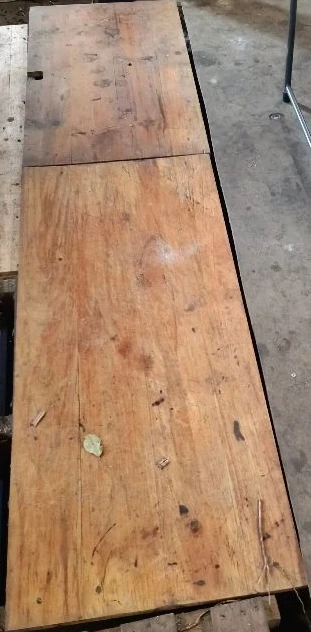
Once the oil is dry and the sand is flat, it’s time to start laying down your pallets in a grid as if you were laying tiles on a house floor. To do this, I borrowed a clever trick from professional tile layers. Do not start laying your pallets against one wall and working your way across. If your shed walls are even slightly out of square (which most bush sheds are!), your entire floor will end up crooked, and you’ll have a nightmare trying to fix it at the end.
“Having a half-decent floor is not only just that when living off-grid. It is, in fact, another layer of comfort when living an off-grid life”
Instead, find the exact centre of the room and lay your first pallet down right there. From that central point, work your way outwards towards the corners of the room. By doing this, any weirdly shaped gaps or uneven edges will be pushed right out to the perimeter of the shed. As you lay them, butt all the pallets hard up against one another. You want them wedged tightly to maintain a relatively flat, continuous surface throughout the room. Of course, a shed isn’t just a perfect empty box. You’re going to run into obstacles like structural roof posts, corners, or fixed furniture like my custom kitchen bench. When you hit these spots, grab your circular saw or a handsaw and cut the pallets to size, or “notch” out a section so they slot perfectly around the obstacle.
De-burring and Checking Your Work.
Once the entire floor space is covered with pallets, you’ll have a reasonably continuous floor base. But before you move on to the final step, you need to do a thorough inspection of the top surface. Walk over the pallets and carefully check for any exposed nail heads, nasty splinters, or timber burs sticking up. Trust me, there is nothing worse than wandering around your shed barefoot or in thongs and kicking an old industrial staple or driving a massive hardwood splinter into your foot. Ouch! Take a hammer and drive any protruding nails flush into the wood, and get rid of any dangerous splinters. Your feet will thank you later.
Top cover with Ply
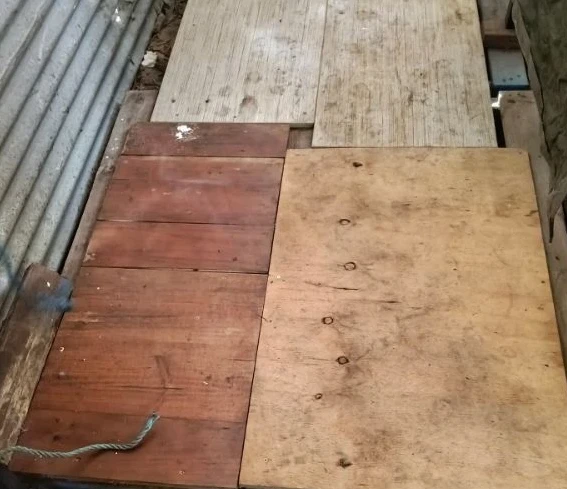
Now you have a solid timber base, but you can’t exactly live on raw pallets—your furniture legs would constantly get stuck in the gaps between the slats. To turn this grid into a proper, liveable floor, you need a smooth top sheet.
Final Floor Cross-Section
[ Top Layer ]   ──> 10mm Ply Sheeting (Screwed Down)
[ Middle Base ] ──> Heavy-Duty Hardwood Freight Pallets
[ Bottom Base ] ──> Levelled Beach Sand / Dirt
I used sheets of plywood that were roughly 10mm thick, which is plenty stiff enough when supported by the heavy hardwood pallets underneath. Just like the pallet-laying process, I started right in the centre of the room to maintain some semblance of staying square. I laid the first plywood sheet down, squared it up, and used heavy-duty wood screws to fasten it securely straight into the pallet frame below. From there, I worked my way outwards towards the edges of the shed, butting each sheet hard up against the next
A Bush “Slab” for Next to Nothing
Once that final screw goes into the plywood, you are officially done. You can stand back, take a look at your work, and enjoy the feeling of solid ground. Let’s be completely honest: it’s not going to win any architectural design awards, and it certainly won’t look like Buckingham Palace. But anything is better than walking on a sandy floor every day. For just the cost of a few sheets of plywood, some screws, and a bit of elbow grease, I completely transformed my living space. No more slogging through soft sand just to walk from the bed to the kitchen bench. It’s solid, it’s termite-proof, it keeps the dust down, and it gives you a proper, comfortable off-grid home base.



I really felt the part about finally getting rid of that soft sand underfoot, because even in a normal house sand seems to appear everywhere, so I can imagine how annoying it would be living with it every day. The idea of using heavy freight pallets as a kind of bush slab is clever, especially starting from the middle instead of following the walls. One thing I was wondering: after a full wet season, do you notice any movement, swelling, or musty smell under the plywood, or does the pallet base stay pretty dry once it is covered?
Hi Hanna,thanks for your comment here.No i have no problem with the floor base in the wet season.My roof is sound so no water gets in at all.The pallet base stays dry as all year round.Its only termites i haave to look out for.
What a creative way to use free materials to solve a problem, well done! I would also imagine that using the motor oil as a deterrent to termites will keep you from having to replace your floor every year.
Do you think treating the pallets with a spray-on stain coating or paint would have the same effectiveness for deterring termites?
Hi Wayne,thanks for your comment here.I am not too confident that stain coating or paint would be as strong deterent as old motor oil.I believe ,you have to make it as toxic as possible for temites to dissuade them from trying to eat the timber base.
You made the tradeoff feel very real here, because a beachside setup sounds idyllic right up until sand gets into every aspect of daily life. Using pallets as a budget floor base is a workaround that makes sense in a remote, off-grid context, especially when the goal is comfort and function rather than a polished showroom finish.
What got my attention most was the hindsight angle, because that is usually where the most useful project lessons live. Starting from the center and working outward is a smart detail, and it turns this from a rough bush fix into something closer to a repeatable system. The used oil part is the one that gave me pause, though, since it solves one problem but could create others over time, so I found myself thinking the pallet selection, leveling, and plywood cap are the strongest takeaways here.
Hi Aly,thanks for your comment here.Yes ,the whole article is pretty much what i would do next time,looking back on this job.The most important thing for me in doing this job was to get that comfort though.