
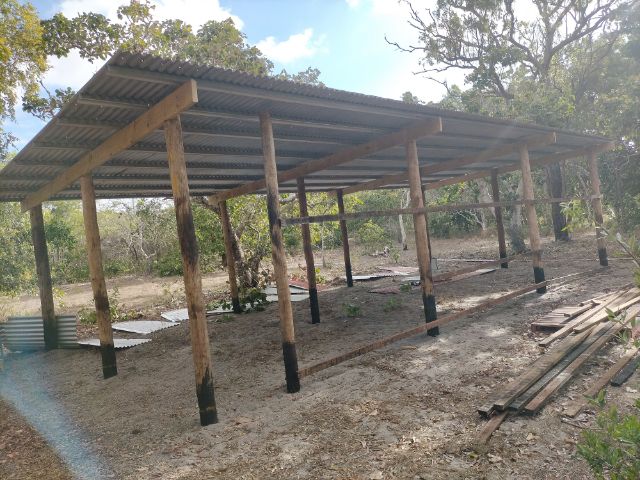
How I Built A Cheap Off-Grid Shed.
Living and working as a self-employed electrical contractor in a remote Aboriginal community in Northern Australia comes with unique challenges. I was renting both accommodation and storage for my business, which was starting to eat into my budget more than I’d like. That’s when the idea of building my own shed popped up. It seemed like a solid move to save some cash and have my own space. The need for more business space was real. By 2021, I figured out I needed more room not just for my tools and materials, but also a comfortable den to recharge after long days on the job. The costs of continuously renting storage were mounting up, and I knew I needed a practical solution to keep my business sustainable.
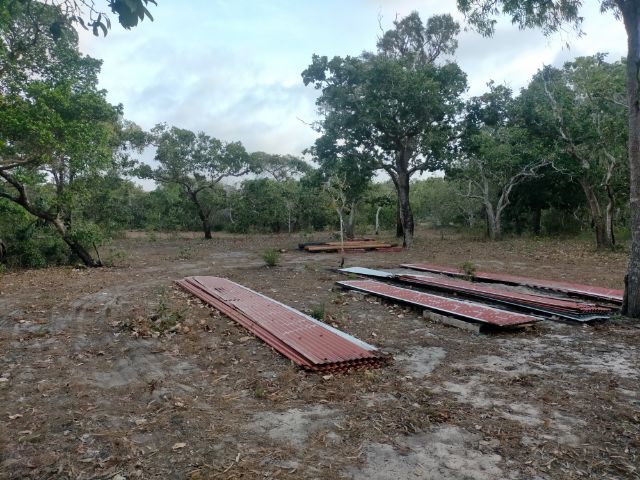
Of course, finding the right spot was crucial. I stumbled upon a relatively flat piece of land right next to the community. That was a stroke of luck. Accessible and fitting my needs perfectly, it was the first step toward setting up my own workshop. If you’re thinking about something similar, make sure to keep an eye out for land that’s conveniently located and relatively level to save on site earthworks prior to building.
Working out exactly what I needed in terms of space got me mapping my current rentals. I literally took the measurements of my rented accommodation and storage areas and just added an extra third of that for future expansion. Gotta be ready for whatever the future holds, right? Having a clear picture of your space requirements can help guide your build—it’s all about planning ahead.
Designing a Cost-Efficient and Practical Shed
Once I nailed down the need and location for the shed, it was time to sort out the design. I didn’t have a fancy degree in architecture or a massive team of experts behind me, but I did have a great example right in front of me. There was this smaller shelter in a nearby campground that caught my eye—simple, functional, and scalable.I decided to mimic that design and scale it up to meet my needs. The idea was straightforward: replicate what’s already working but make it custom to fit my requirements.

For anyone out there on a similar journey, remember you don’t always need to reinvent the wheel. Sometimes, it’s about taking inspiration from existing designs and tweaking them to your taste .Determining size was pretty hands-on for me. I busted out my good old ruler and sketchbook, drawing everything to scale right there on the pages of my diary. It’s about translating your needs onto paper before you start building. My advice? Don’t overthink it. Keep your design simple and focused, prioritising what’s crucial for your project.

Simplicity was a strong theme in my build. Adapting the shed for sustainable living meant ensuring the design allowed for good airflow and enough light—a must in the tropics! I actually oriented the shed so the front faces north, so I get maximum light each day as the sun passes from east to west. When designing your off-grid space, think about the climate and conditions you’ll be living in. Plan for things like ventilation and natural lighting, which can save you a lot of hassle later on.
Material Gathering and Construction Process
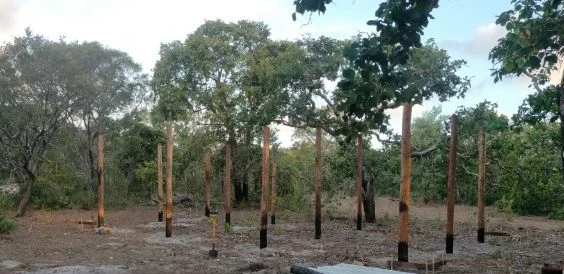
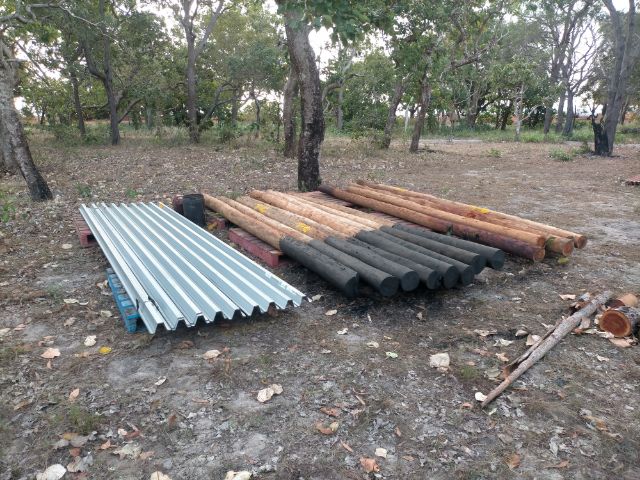
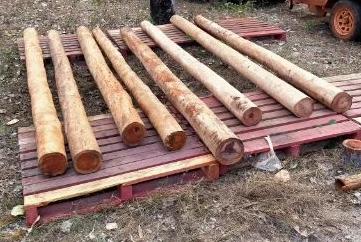
Once the design was settled, I set about gathering the required materials without burning a hole in my wallet. Living in Cape York, I had the fortune and challenge of harvesting bush timber for the main supports. There were plenty of gun straight Cape York bloodwood and stringybark trees around, so I turned them into sturdy support poles. Please see my other post for details on how I went about harvesting, treating, and using bush timber. In town, some folks were replacing the roof at the local regional aerodrome. Lucky for me, I got gifted about 100m² of secondhand corrugated roof iron and hardwood timber that used to be roof battens. Recycling these materials not only saved me a chunk of cash but also fit in nicely with a golden rule I live by in a remote area. Never throw anything away that can be reused elsewhere. Despite the savings, there were some materials I needed to buy. Like those fiddly bits that hold everything together: galvanised roof and batten screws, treated pine rafters, steel top hat and hinges for the door and swing windows.
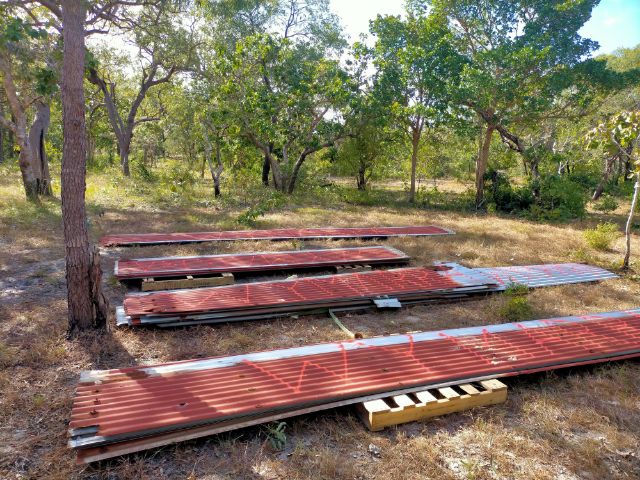
Construction was a whole adventure in itself. I am not a builder; I am a sparkie by trade, but after being on countless construction sites over the last 33 years and using personal and online resources, I soon got a fair idea of how to get started. It’s funny how potential homelessness and a fast-approaching Northern Australia torrential wet season can get somebody motivated to get a roof over their head. Laying out the site was the first practical step—old-school with string lines and profiles using the 3,4,5 method to keep everything square. Then, it was all about digging those post holes by shovel and hand. I was lucky here as the shed site is approximately 100m from a beach, so the soil was all sand.
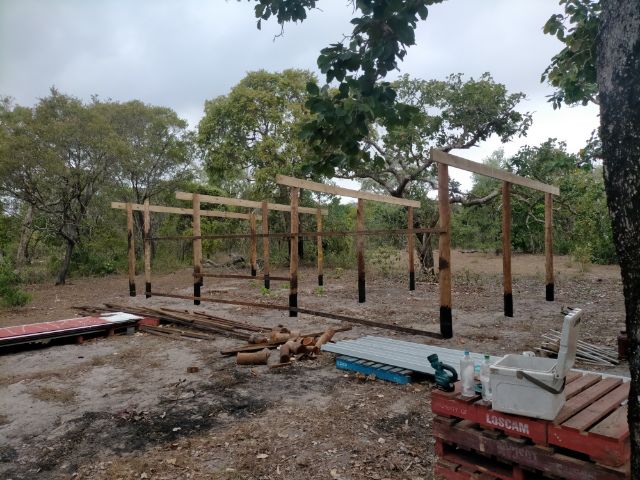
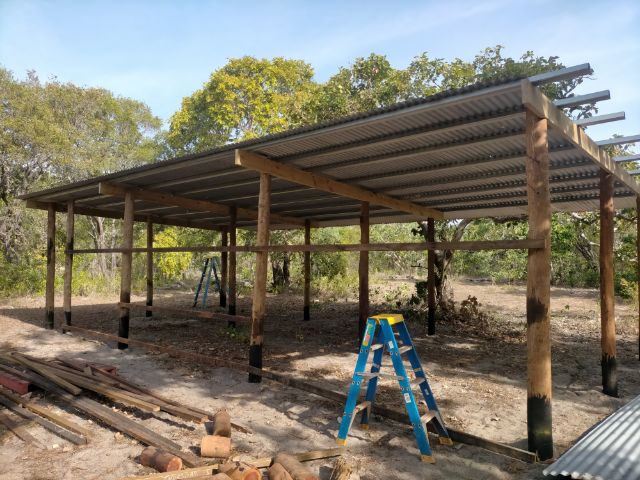
Each day after work, I’d spend an hour or two on-site. Weekend warrior style helped me chip away at tasks like securing roof iron, erecting wall frames, and finally setting up windows and doors. Consistency is key. Don’t be discouraged by the slow pace. It’s about progress, whether big or small; each step counts.
Surviving the Challenges of Remote Building
Building off-grid was anything but easy. The sweat, the dirt, and the physical effort were all part of the process. When you’re out here battling the elements, it’s as much about mental endurance as it is about physical strength. Just know every drop of sweat and every aching muscle means progress. Balancing a full-time gig with shed construction required some serious time management. Most of the build happened after work or during weekends. If you’re in a similar boat, planning your days carefully can make a world of difference. Stay patient and keep grinding away—progress might be slow, but it’s steady

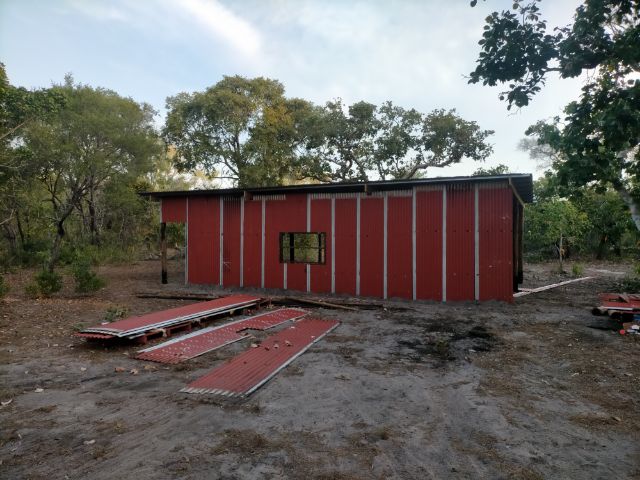
The shed project started with the secondhand iron being delivered to the site on June 8, 2021 and was completed on November 12, 2021. I was fortunate enough to be able to turn 100m2 of free secondhand roof iron, hardwood battens and other free recycled building materials into a completed 60m2 shed. I also outlayed about $3000 aud in total for the extra building hardware required. Seeing the shed standing strong after its first big tropical monsoon downpour in December 2021 was a personal victory.

Each hurdle and challenge melted away when I finally stepped back to see what had been accomplished. I hope this article was able to share some top off-grid shed ideas that the reader and others are able to use for their own similar project. For others looking to tackle a similar project, know that the financial cost, although important, is matched by the immeasurable satisfaction of standing inside something you built with your own hands. I would be interested in any thoughts or questions you may have r.e this build in the comments section below. I would be only too happy to share any tips and tricks I learned along the way with this project.


This was a really interesting read. I liked how you showed that with enough determination, planning, and resourcefulness, it’s possible to build something practical without spending a fortune. Reusing materials and adapting the design to the local climate was especially smart.
One thing I was curious about is how the bush timber is holding up is there any movement in the structure since the shed was completed? Did the post get cemented in? or did you use wider footings at the bottom of the hole to help reduce movement?
Hi Letsret, 5 years on the bush timber posts are still rock solid with no sign of termite damage, etc. The posts were not cemented in; they were buried directly into the soil at a depth of 1 metre. The bottom of the posts were treated with an anti termite paint before burial as shown in one of the pictures on the post.
This was a really interesting article about building a cheap off-grid shed, especially the practical approach to keeping costs down while still creating a functional structure. I like the idea of focusing on simplicity and using affordable or repurposed materials, since that seems to be one of the most important factors in off-grid building projects.
One question I had while reading is how much of the overall cost savings come from using reclaimed or second-hand materials versus carefully planned design choices like size and layout. I’m also curious about what the most common mistake is that beginners make when trying to build an off-grid shed on a tight budget.
Hi Iyere,overall cost savings can be attributed to both reusable materials and pre planning the size and location.I suppose the lesson here is prior planning prevents a poor outcome in any task.Thanks for your comment friend.
Interesting read I like how the project keeps things simple and budget-friendly while still aiming for a functional off-grid shed. It feels like a realistic approach for anyone trying to build something practical without overspending.
I’m curious what you found to be the most challenging part of the build, and whether you’d do anything differently if you built it again.
HI Iyere, thanks for your comment here.The most challenging part i found in the building was just the day to day plugging away one step at a time in the heat as well as working fulltime.I am considering doing another project but i think it will go a bit easier this time around as i learned a lot doing the first one.