
14 Things I Did To Get Comfortable Living Off Grid.
14 Practical Things I Did to Get Comfortable Living Off Grid
Let’s be completely honest for a second. When most people think about off-grid homesteading tips for beginners, they picture a rough life surrounded by isolation and just doing it tough. They may imagine shivering in a dark cabin, eating cold beans out of a tin, and reading by a single, flickering candle.
When I first transitioned to my off-grid shed setup, I actually enjoyed living a bit rough etc. but the romance of off grid living eventually wore off.Ever since november 2021 when my shed build was complete,I kept adding some feature to the shed to make it easier in living off grid.All of this didn’t happen according to a set schedule or plan,it was more a case of trying to do repetetive things an easier way.I am a bit of a slow learner at times but i eventually figure things out. Surviving is easy; learning how to live comfortably off grid is the real art form.
Over the last few years, I have tinkered, built, and automated my way into a highly functional setup. If you are just starting out, here are the 14 practical things I did to achieve comfortable living off grid without spending a fortune.All are listed below in roughly the chronological order that they happened.
1. Design the shed with a raised roof height.
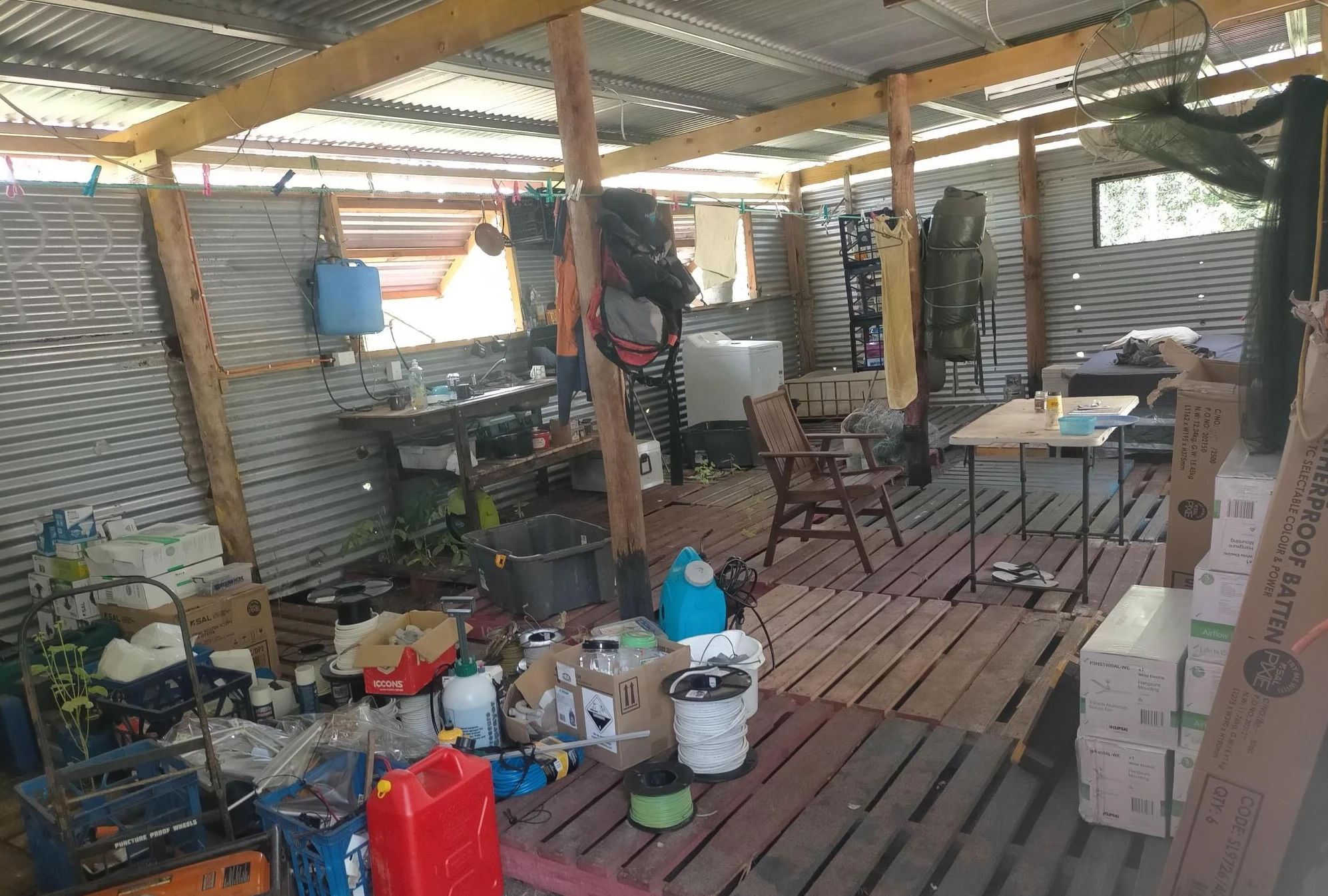
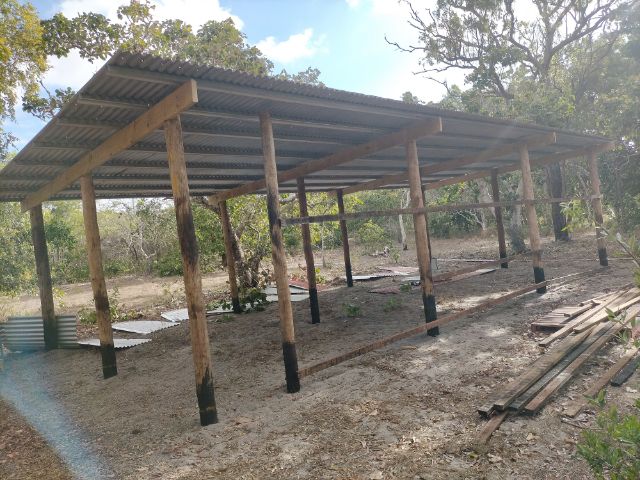
Here is a bit of golden advice I picked up after a random conversation with a builder one day: make your roof high. Following his tip, I made my roof height above 2.7 metres at its lowest point, rising up to 3 metres at the highest point as the roof design is a raked roof. This height ensures that the intense heat radiating off the tin roof isn’t felt pushing down into the living space below. You can check out the full structural layout in my linked shed build post.
2. Prioritised a High-Quality, Leak-Free Roof
When I was constructing the shed, I knew a monsoonal wet season was fast approaching. I made absolutely sure that I put a sound roof onto the structure. I took my time during the installation, double-checking every single flashing, screw seal, and overlap to ensure there would be zero leaks. When the torrential rains finally arrived, sitting inside a completely dry, secure building proved that taking that extra time was the best decision I could have made.
3. Installed Six Swing-Out Windows for Natural Ventilation
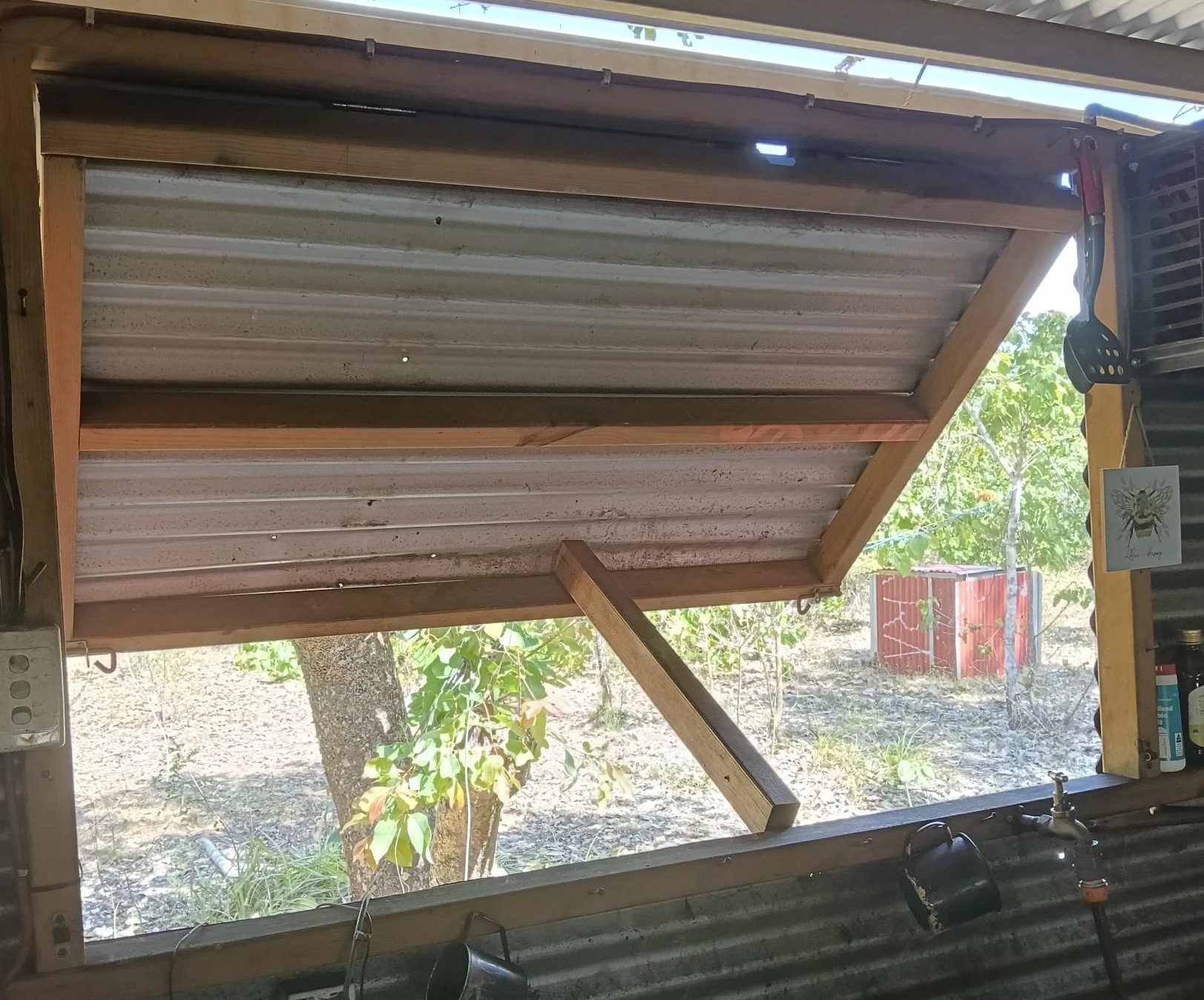
To complement the high roof, I installed six massive swing-out windows, each measuring 1.5 metres by 0.9 metres. My location experiences strong south-easterly trade winds for six months of the year, and north-westerly monsoonal trade winds for the other six months. Both seasons regularly see many days with winds between 10 and 20 knots. By installing large, strategic windows, I can take full advantage of this natural ventilation, capturing the breeze to keep the entire shed cool and fresh without needing power-hungry fans or air conditioning.
4. Upcycled Milk Crates into Wall Cupboards
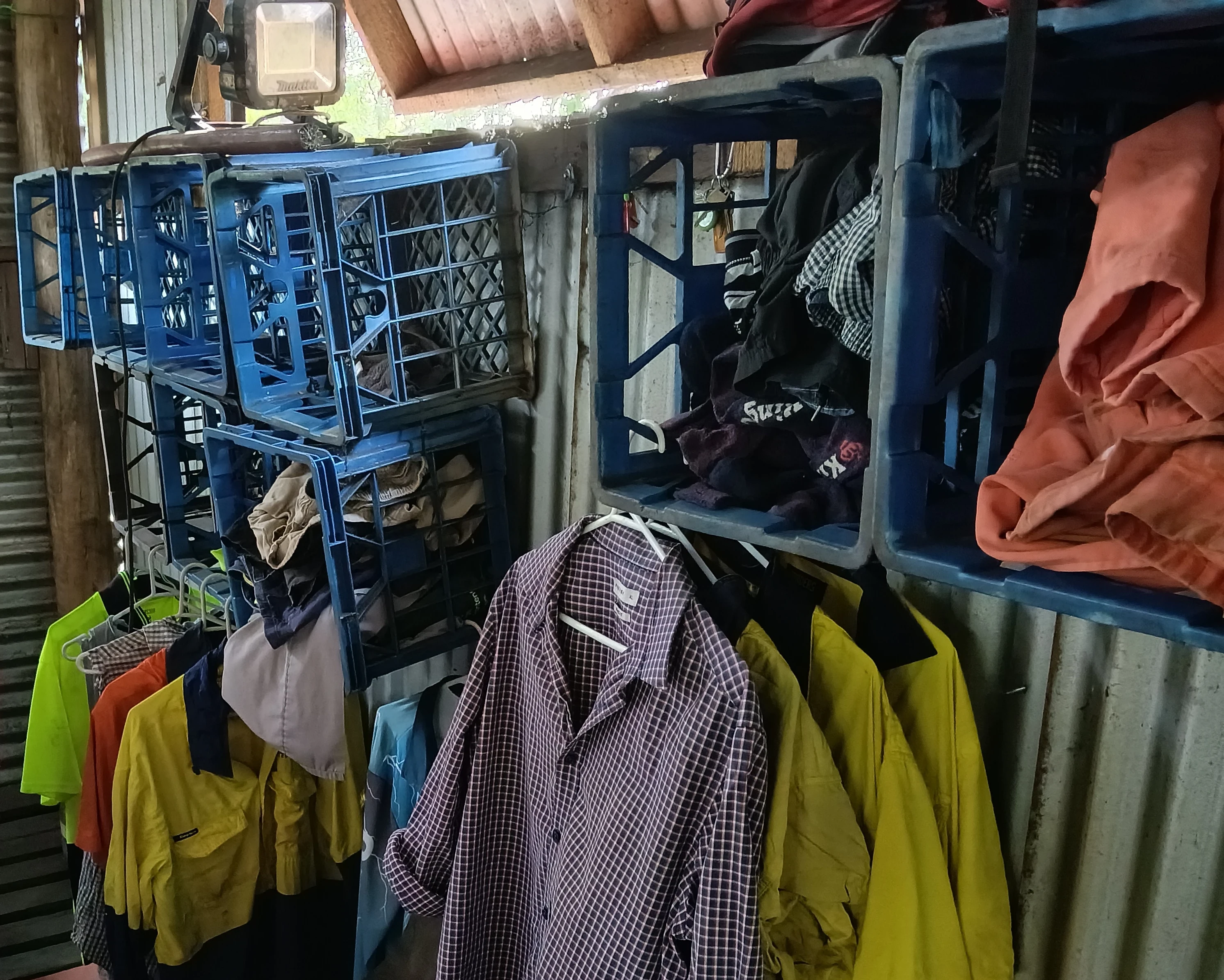
Storage can be an expensive challenge when building out an off-grid space, but you can get highly creative with budget-friendly alternatives. I sourced 16 heavy-duty plastic milk crates to solve my storage woes. I turned them all on their sides and screwed them directly into the wall studs. This instantly created a modular grid of kitchen cupboards and clothes shelving. They are incredibly tough, easily washable, cost almost nothing, and keep all my gear neatly organised and off the floor.
5.Build a good bed.
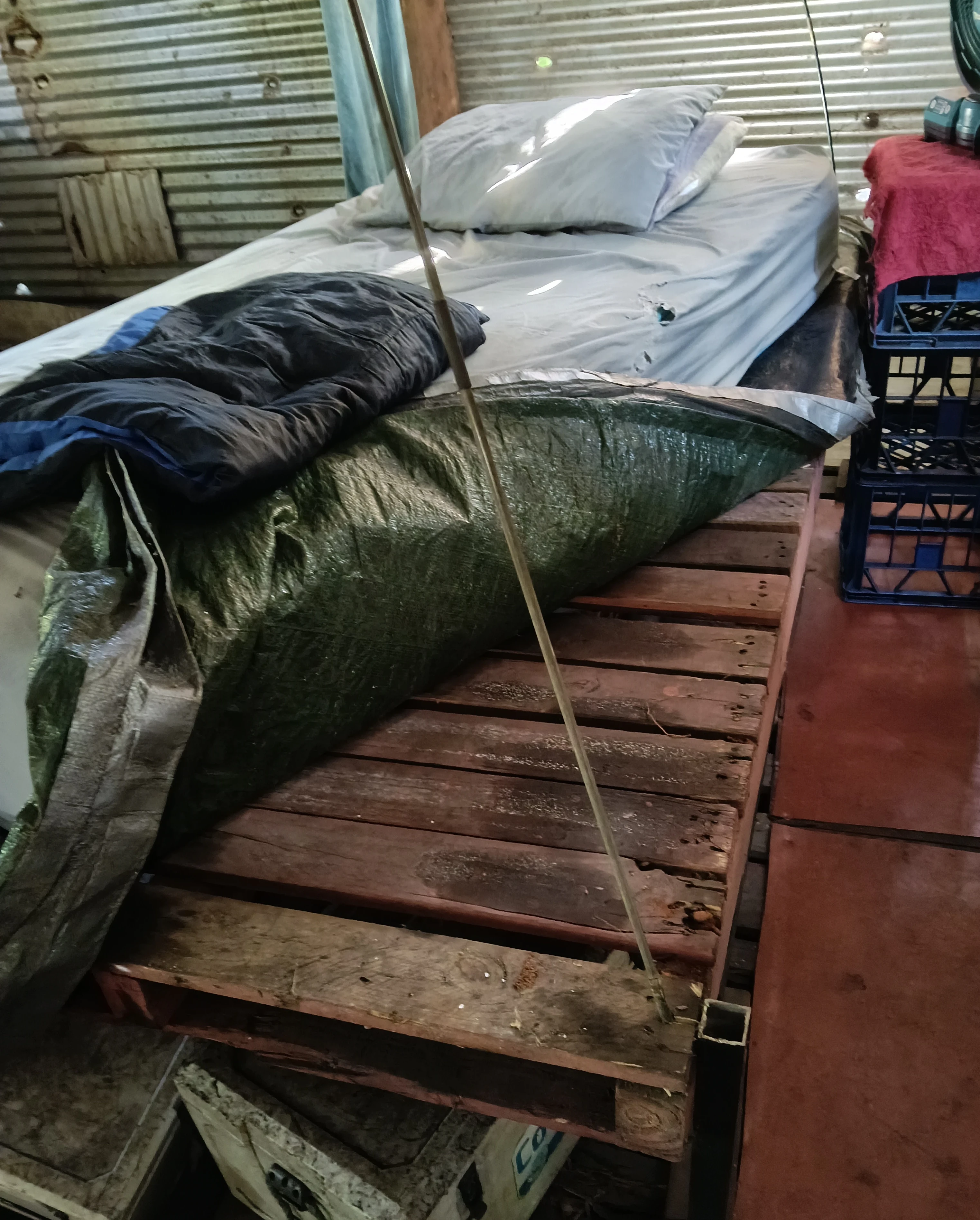
To hold up that premium mattress, I put my DIY skills to work using recycled materials. I built a rock-solid bed frame out of wooden pallets. I joined two 1m² pallets end-to-end to get the perfect length and width. For the legs and the structural support frame underneath, I utilized 50mm x 50mm square aluminium pipe. The best part? The metal was all leftover scrap material I had lying around, meaning the entire frame cost me next to nothing to assemble.
6. Invested in a High-Quality King Single Mattress
Never underestimate the power of a good night’s rest when you are working hard on the land. Not taking the time to ensure youre going to have a comfortable sleep is one of the biggest mistakes you can make. I bought a super comfortable, high-quality king single mattress, and it was worth every single cent. After a long day of sparkie work, then carrying out chores around the camp, climbing into a genuinely comfortable bed makes all the hard work worthwhile.
7. Hung a Mosquito Net Over the Bed
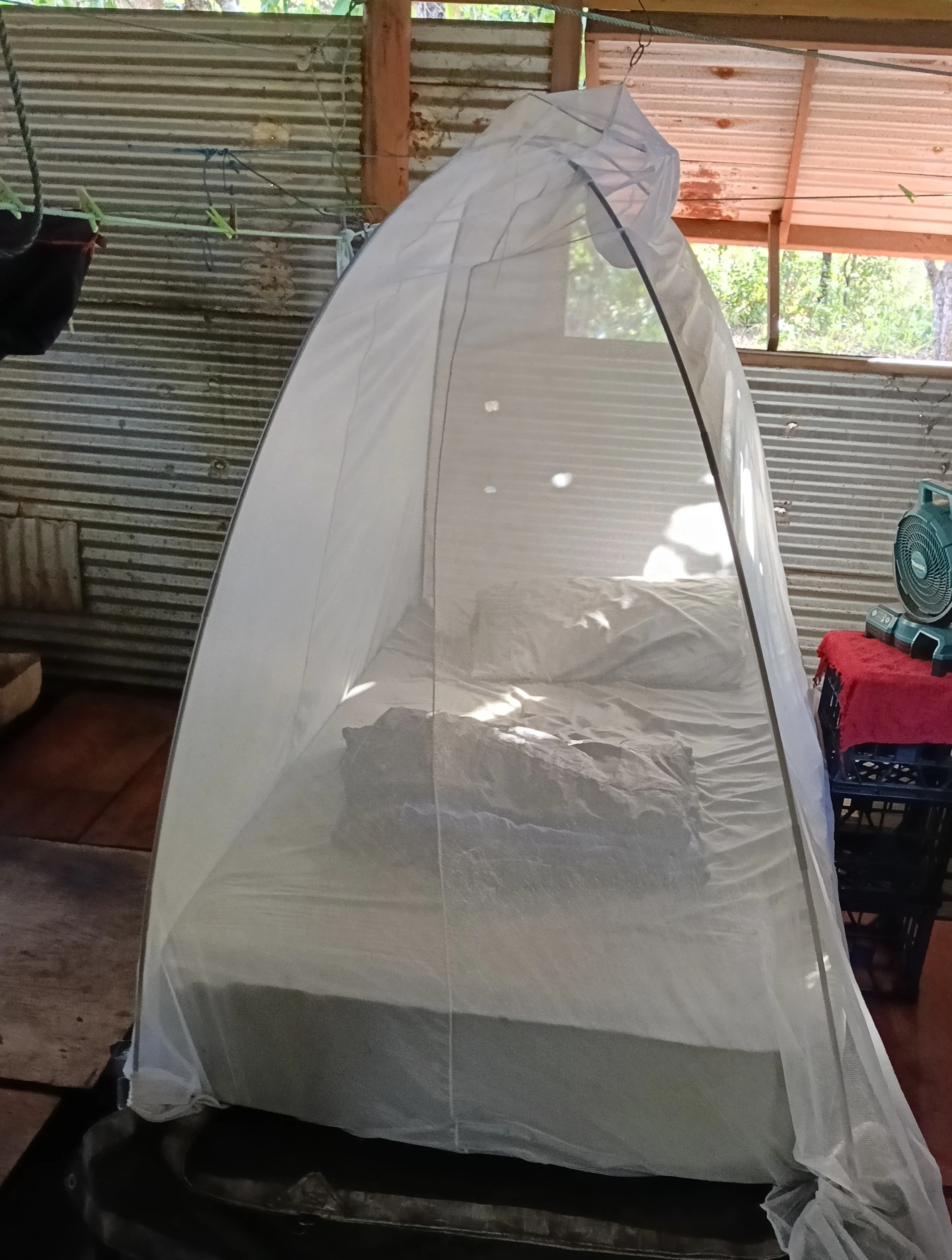
Speaking of a good night’s sleep, you have gotta keep the bugs away at night. Out in the bush, insects are a fact of life, and there is nothing worse than waking up to the buzz of a mosquito next to your ear. Hanging a simple mosquito net directly over my bed created a peaceful, bug-free zone. It guarantees that no matter what is flying around the shed at night, I can sleep completely undisturbed.
8. Designed a Custom Overhead Gravity Shower
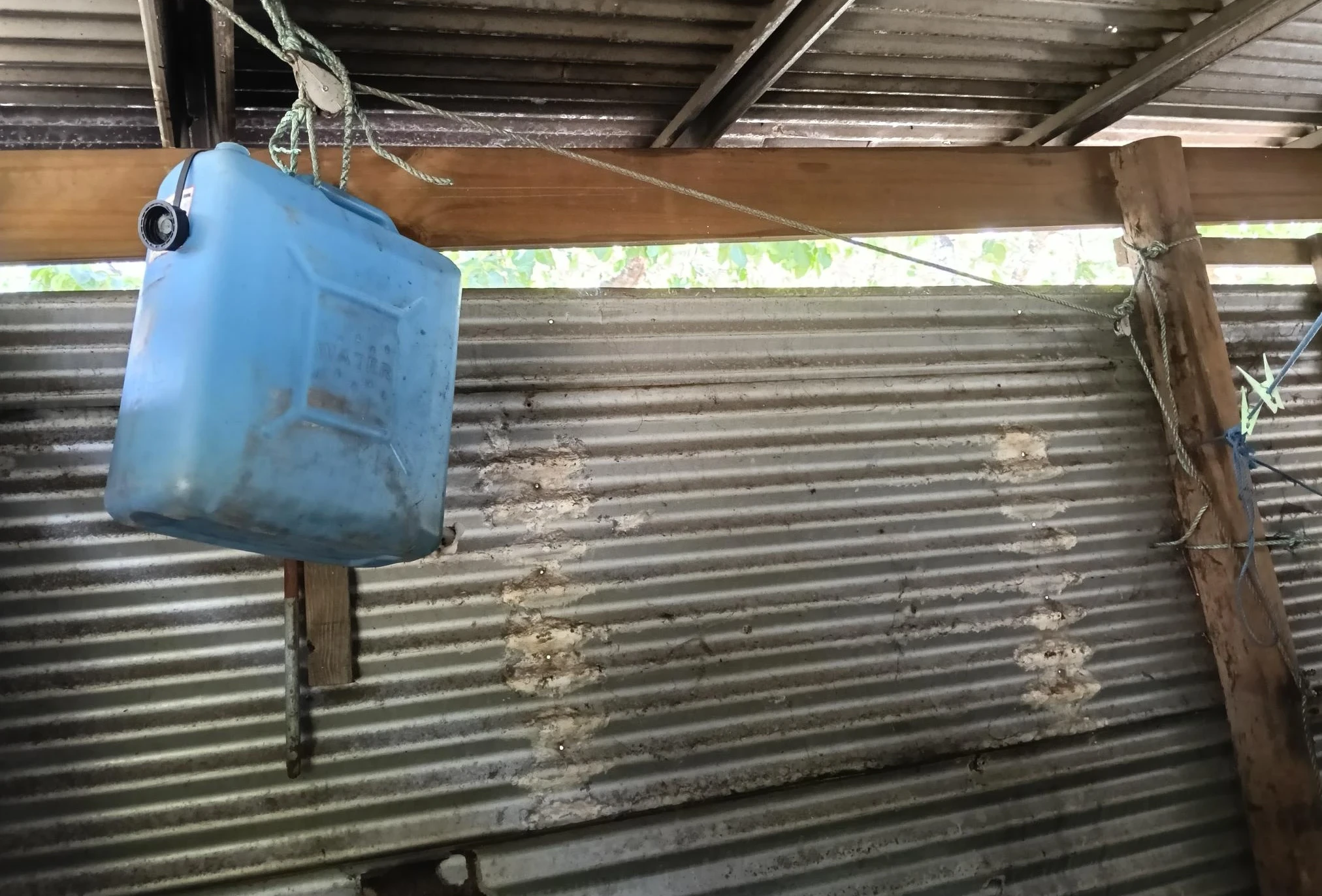
You don’t need complex, expensive pressurized plumbing to enjoy a refreshing daily shower. I built an overhead shower using a simple, brilliant gravity-fed system. I took a 20-litre water drum and fitted a standard tap to the bottom of it. Then, I tied a strong rope to the drum, ran it up through two pulleys mounted to the ceiling, and brought it down to a wall-mounted cleat. Now, I can easily lower the drum to fill it up, hoist it into the air, lock it off on the cleat, take my shower, and lower it down to repeat the process next time.
9. Built a Wood-Fired Hot Water System
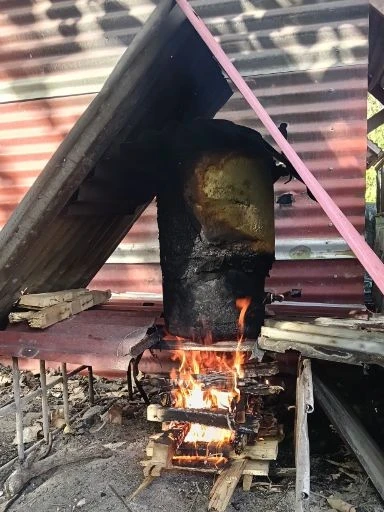
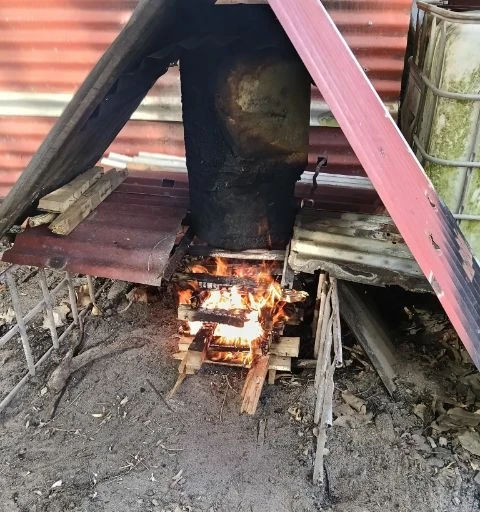
Of course, a gravity shower is only half the battle—you also want hot water! To complement my overhead drum setup, I built a dedicated wood-fired hot water system. There is an abundance of firewood around the property, so utilizing it to heat my shower water keeps me completely independent of gas or electricity for heating. If you want to see exactly how I set up and operate this hot water service,see my link to the hot water system build here.
10. Crafted Pallet Kitchen Bench with Twin Sinks
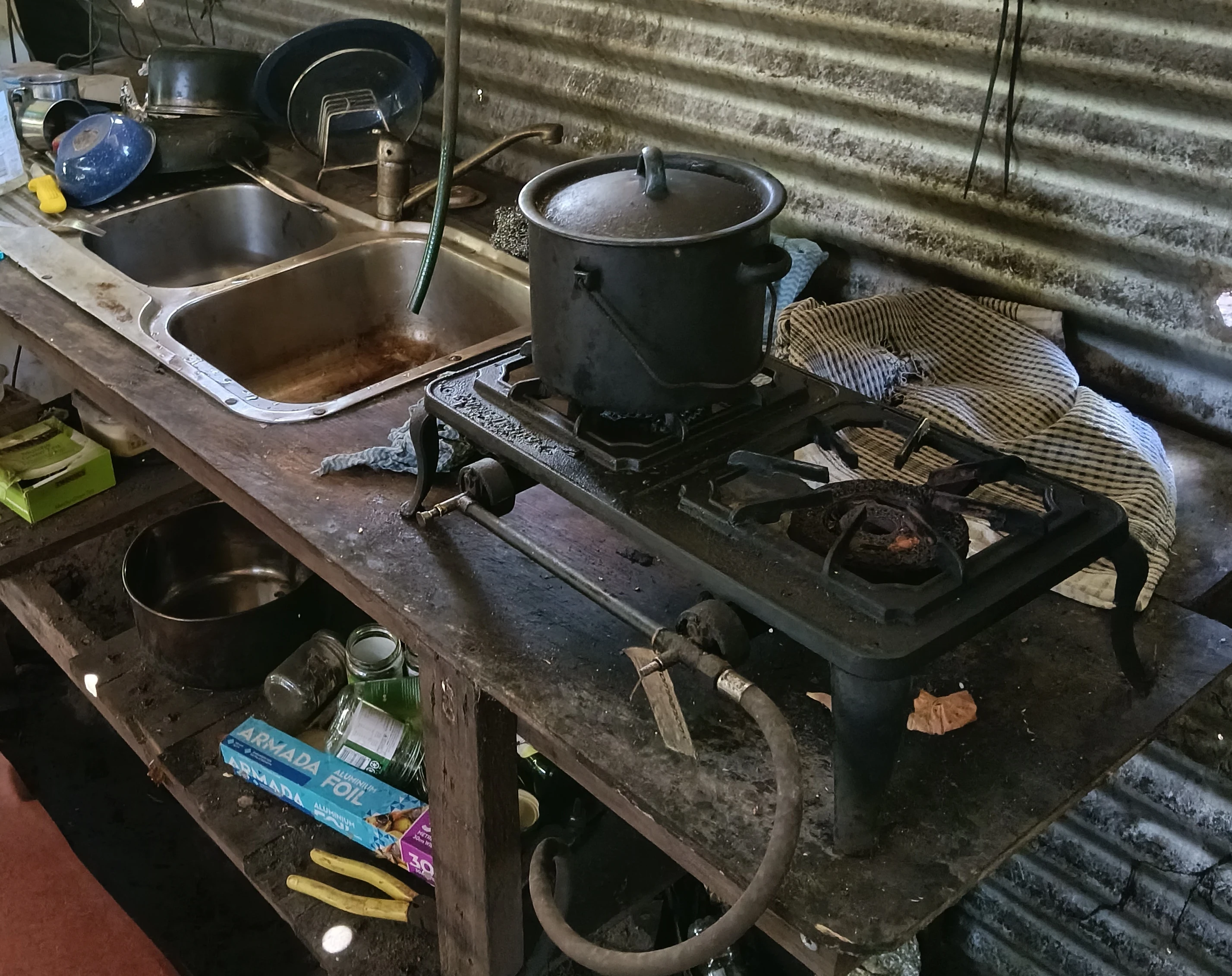
Kitchen infrastructure is vital for maintaining a clean, organised living space. I built my main kitchen bench entirely out of wooden pallets. I sanded them down, sealed them, and fitted two deep sink tubs right into the top. I then connected proper waste plumbing to the sinks, routing the greywater safely outside away from the shed. Having a large, dedicated area to wash vegetables, prep meat, and clean up after meals makes daily life incredibly smooth.
11. Added a 2-Burner Gas Hotplate
While I love cooking over an open fire, doing it for every single meal can become a time-consuming chore, especially when it is raining or you are exhausted. To make life easier, I bought a simple two-burner gas hotplate. It hooks up to a standard LPG bottle and allows me to quickly boil water, fry up breakfast, or prepare dinner at a moment’s notice with the turn of a dial.
12. Wired the Shed for Solar with Generator Backup
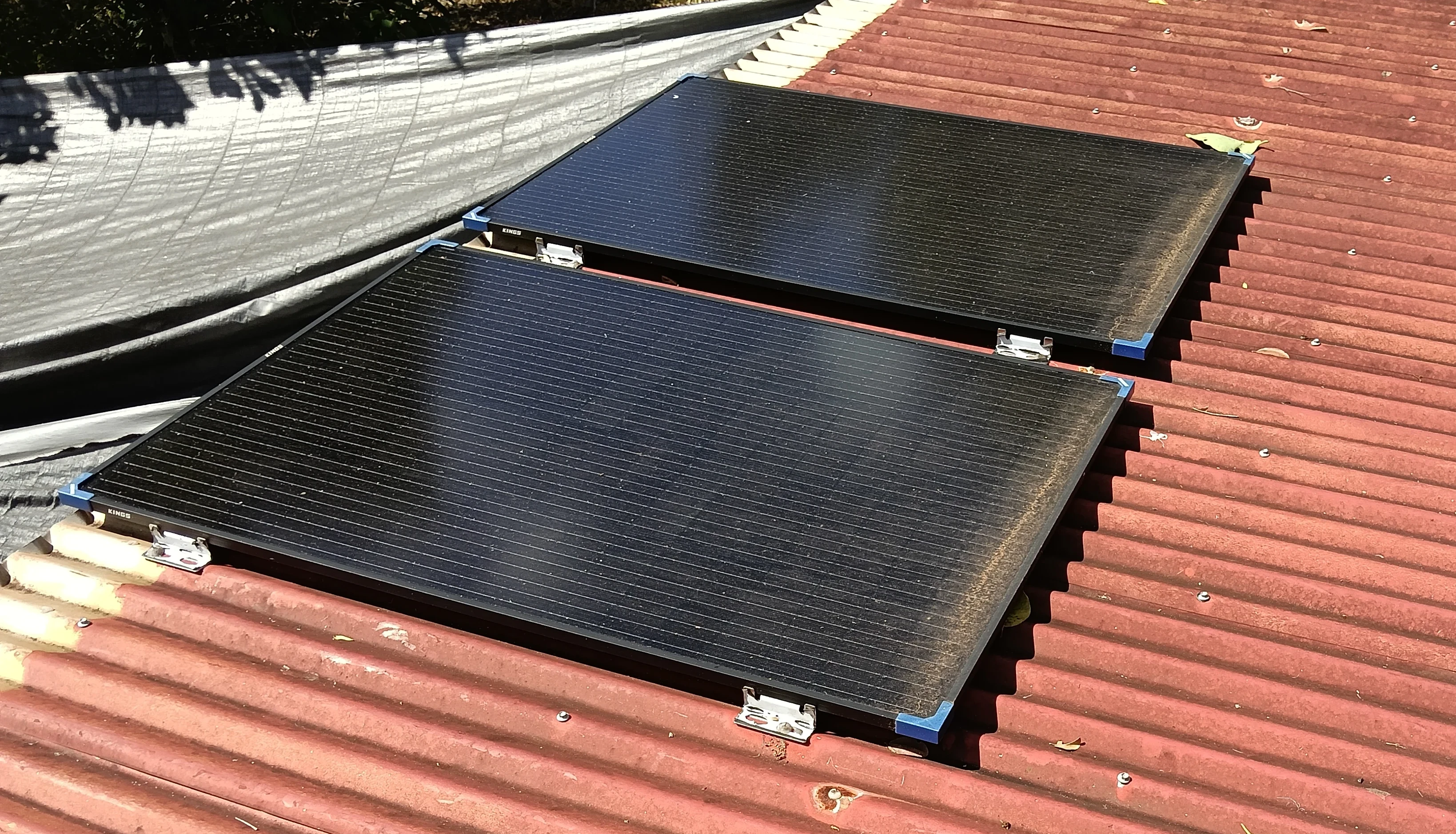
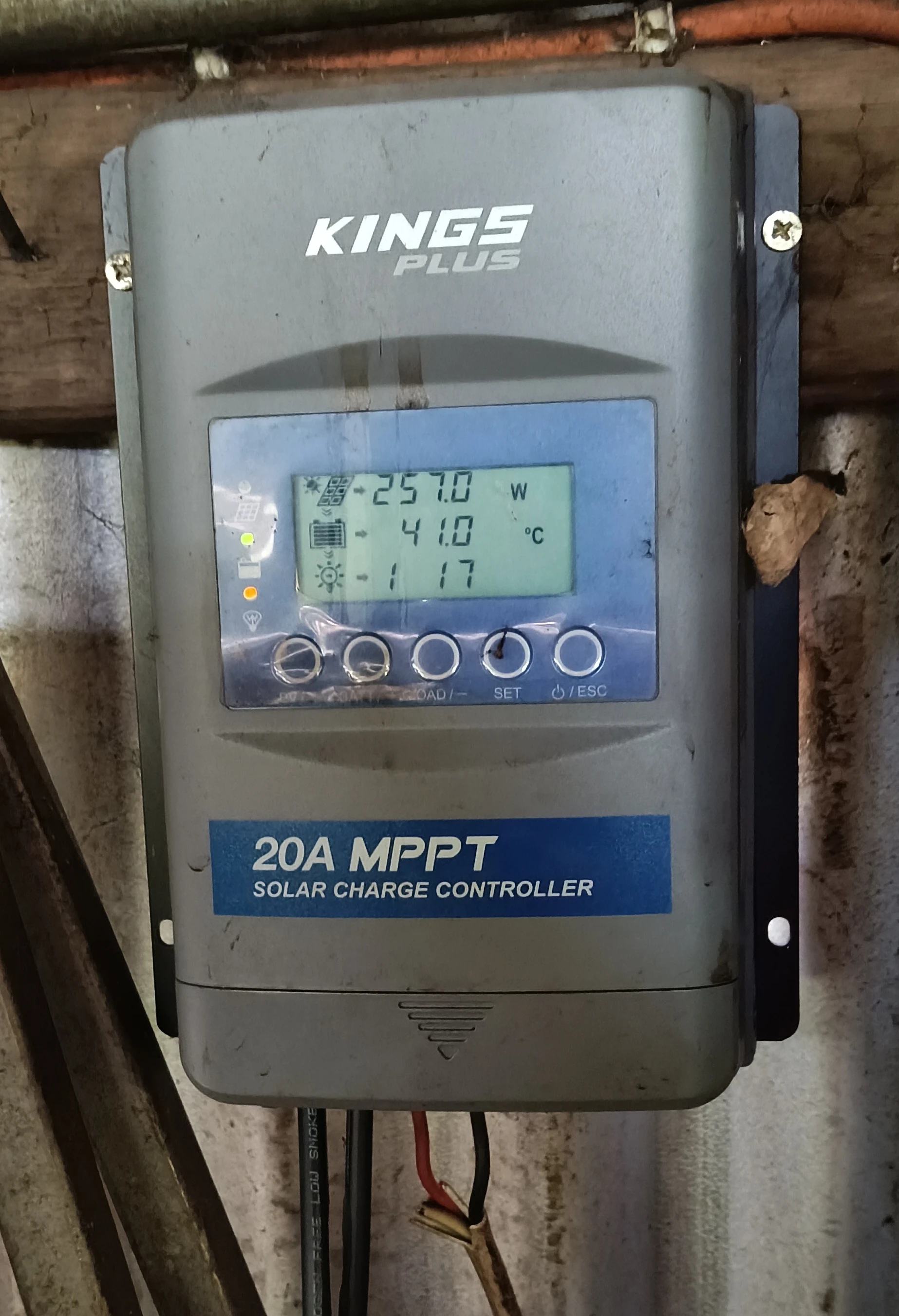
You cannot have modern appliances without a reliable power system. I wired up my shed to run primarily on solar energy, backed up by a generator for those inevitable heavily overcast weeks. My current system relies on two 200W solar panels that feed into a 20A solar charge controller. This setup charges two 200Ah batteries, which then run directly into a 3kVA 12VDC to 240VAC inverter.
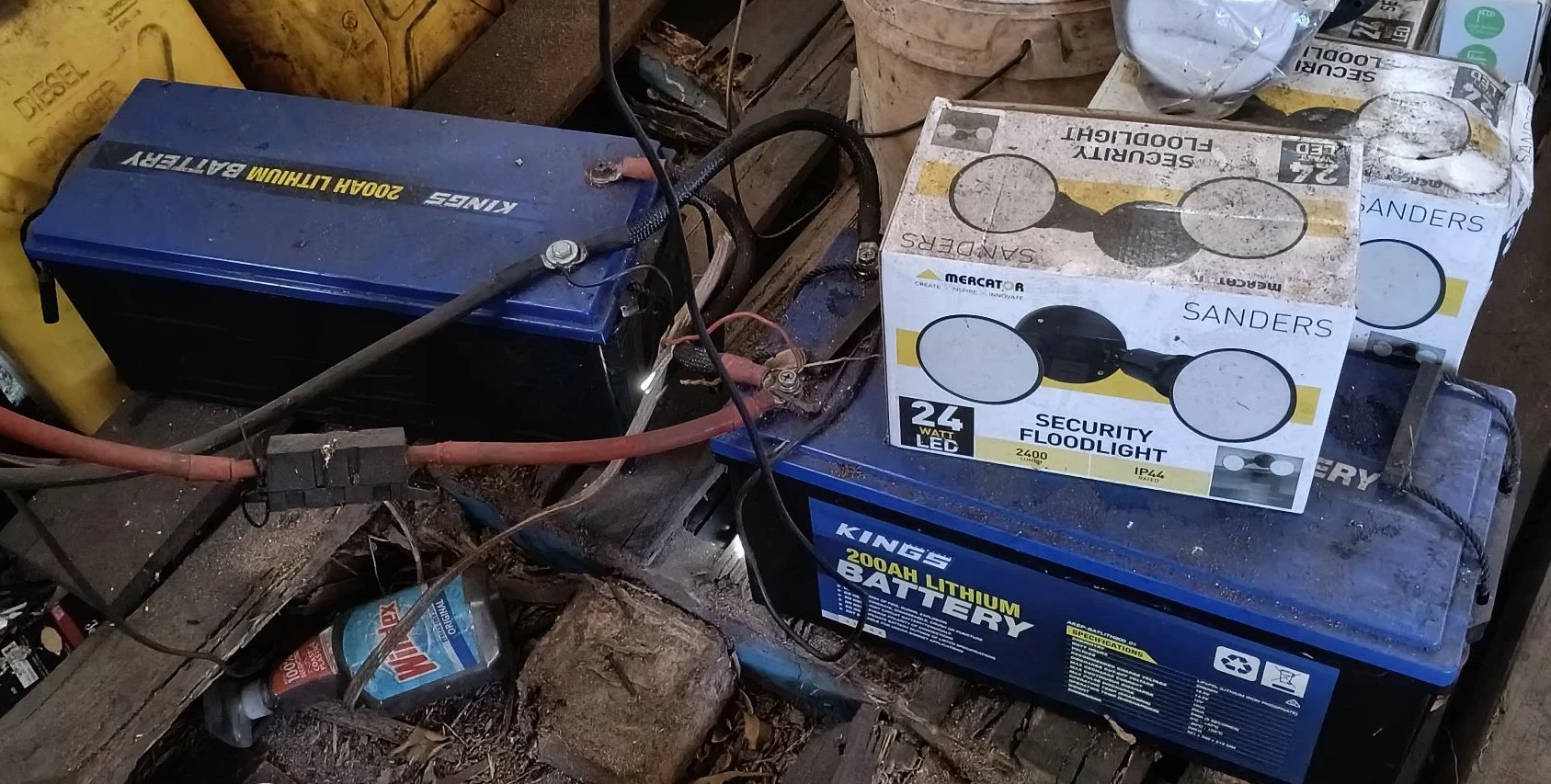 This gives me plenty of clean, stable power to run my fridge, TV, router, lighting and other GPO’s without a worry.If the solar fails and it does as not everyday is bright and sunny,I have a 3kva 4 stroke petrol generator that will take over the load if required.It is not an automated switch over from solar to generator
13. Installed Starlink for Constant Comms
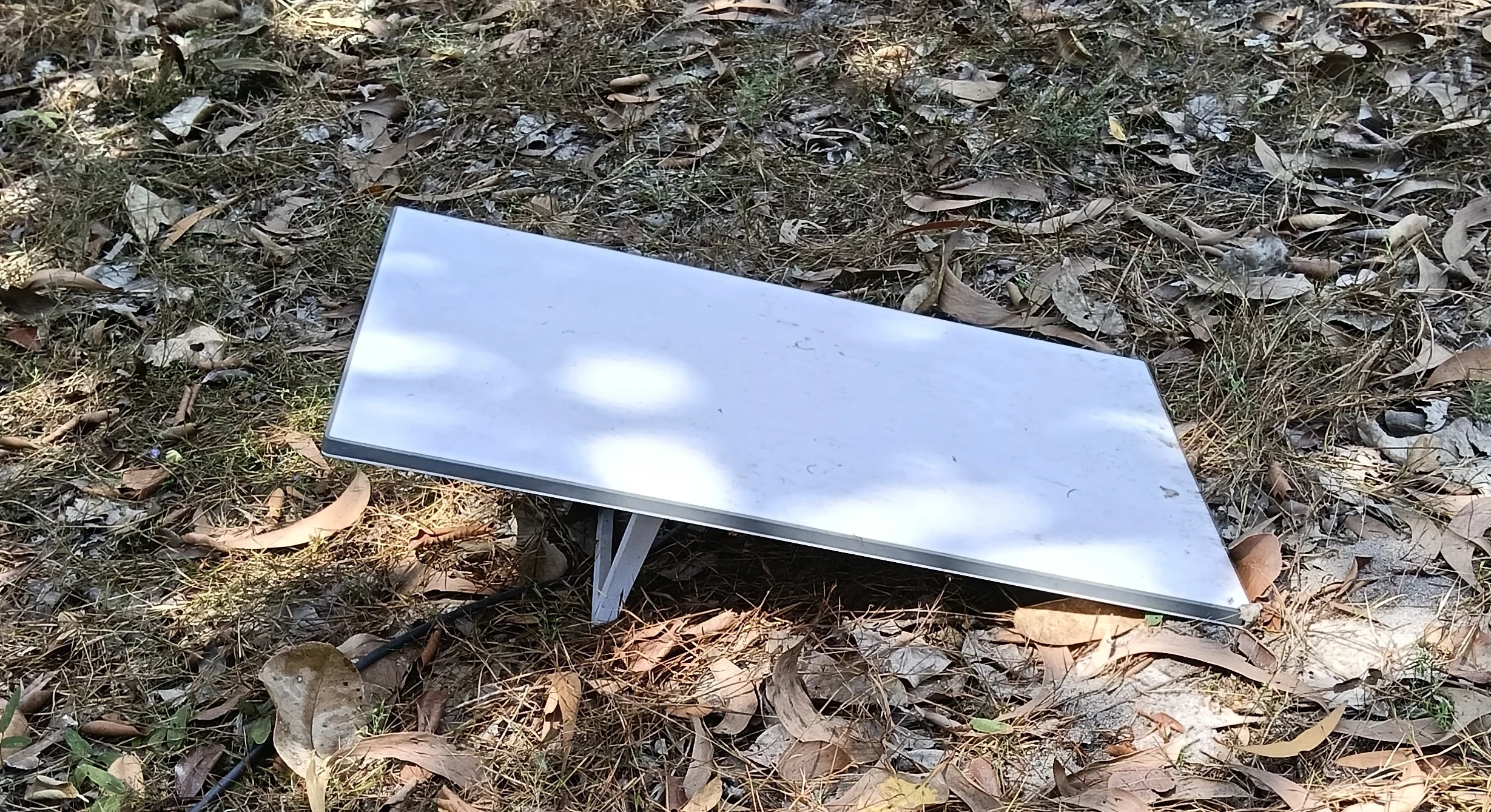
A huge part of feeling secure and relaxed out here is staying connected. I installed Starlink, and honestly, it has been a total game-changer. The setup is remarkably straightforward: you just put the dish in the yard so you have a clear view of the sky, run the cable back to your router, and plug it in. Using the Starlink app, you can position the dish correctly to find the best line of sight to the satellites, and away it goes. Thank you Elon Musk! As long as my solar or generator power is switched on, I have blazing-fast, constant internet and reliable communications. Plus, the dish can be mobile too, which I break down entirely in this linked post about my mobile internet setup whilst on the move in my vehicle in remote locations with no phone signal for miles.
14. Install a 40” Flat Screen TV
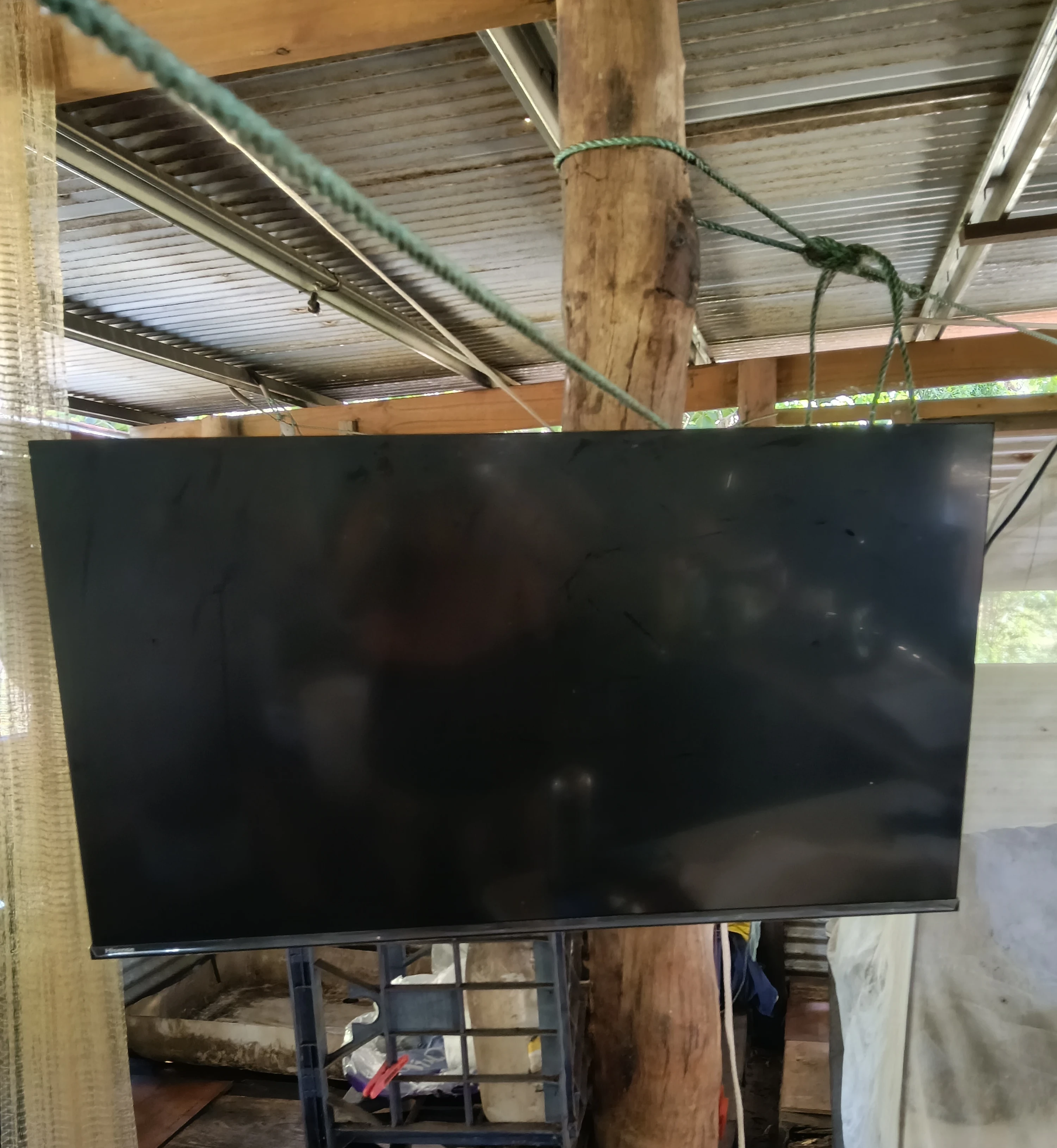
Looking at a tiny smartphone or laptop screen for a night’s entertainment gets old incredibly fast. One of the last things I did to make my off-grid shed feel like a real home was mount a 40-inch flat-screen TV on one of the support posts for my shed. Having a proper screen to watch movies or catch up on the news completely changes the vibe of an evening. It brings a familiar slice of modern comfort into the bush, making the space feel less like a temporary campsite and more like a permanent sanctuary.
Final Thoughts
Transitioning to an independent lifestyle doesn’t mean you have to rough it. By focusing on smart ventilation, reliable power, simple DIY comforts, and a pest-free place to sleep, you can easily build a space that has most of the modern conveniences of a home in the city but you still get to experience the bush feel.
If you are currently planning your own setup, I can help you with ideas or suggestions for your building plans,solar/generator power needs,water supply set up etc.Please leave a comment below, and let’s get your off-grid project moving from design to construction to living in it!


As someone curious about off‑grid living, I appreciate how you shared not just survival tips but the practical steps that made your setup genuinely comfortable. The mix of DIY creativity, like using milk crates for cupboards and building a pallet kitchen bench, alongside modern touches like Starlink and a flat‑screen TV shows how off‑grid life doesn’t have to mean giving up convenience.
One thing I’m wondering: looking back, which of these upgrades made the biggest difference in shifting from “roughing it” to truly feeling at home off‑grid?
Hi Alice,thanks for your comment here.The best thing i ever did was put down a pallet floor to get out of the sand everyday.It truly changed the comfort level for me big time!You can see that post here https://bushsparkie.com/beach-…
Some great ideas for living off the grid. I especially like the tip of building you roof higher as it will make the space inside a lot cooler. Also a really cute idea to use milk crates as cupboard space.
The only set back that we would not be able to do here is to install Starlink as it doesn’t exist in South Africa so depending on area good WiFi could become problematic. Other than that I am curious how much you save every month living off the grid like this?
Hi Michel,thanks for your comment here.I do save quite a bit on living on solar power as well as not having to pay for water at all.My dwelling is pretty simple but tough so i also save on not having high property maintenance costs as well.
The gravity shower is such a practical idea, but the part about hoisting a full 20-litre drum made me stop and think about the weight involved. Lowering it for filling certainly sounds easier than trying to pour water into it overhead, although lifting that much water regularly could still put a lot of strain on the rope, pulleys, and ceiling attachment. Have you added any kind of secondary safety cable or locking system in case the main rope or cleat ever fails? I would also be interested to know how often you inspect or replace those parts, especially in a humid climate where ropes and metal fittings may deteriorate faster.
Hi Hanna,thanks for your comment here.I dont have any secondary safety system in place as my pulley is gal coated and the cleat and rope strength is more than adequate to handle these loads.The weather here doesnt seem to affect my set up at all.