

The Good And Bad In Off Grid Living.
Let’s be completely honest for a second. When social media feeds fill up with pictures of pristine cabins, gorgeous sunsets, and the absolute freedom of leaving the city behind, it is easy to get swept up in the romance of it all. You look at those photos and think about how peaceful it would be to quit the daily grind. But surviving and thriving out here requires a clear look at what you are actually signing up for. If you are exploring off grid living for beginners, you need to understand that it is a package deal containing the good and bad.
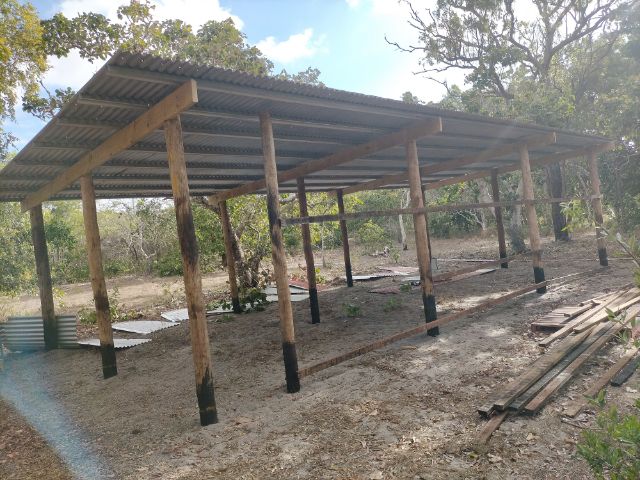
It is a lifestyle of highs and sometimes exhausting lows.I’ve been living in my DIY off-grid shed on Cape York Peninsula since about November 2021. It is a simple structure—just corrugated iron built onto a robust timber frame with no insulation. It sits right near a local creek, which acts like a natural magnet for the cold, especially during the winter nights and early mornings. The very things that make life beautiful also make you work for every single comfort.Despite the daily effort, I firmly believe that off grid living has been good to me. In fact, for me, the good outweighs the bad. To give you an honest look at what this life entails, let’s break some very real pros and cons of off grid living.
The Bad.
Modern infrastructure hides the effort required to keep your body warm, fed, and clean. Off the grid, that infrastructure is replaced by your own two hands. Here is a look at the daily realities that can and do wear one out.
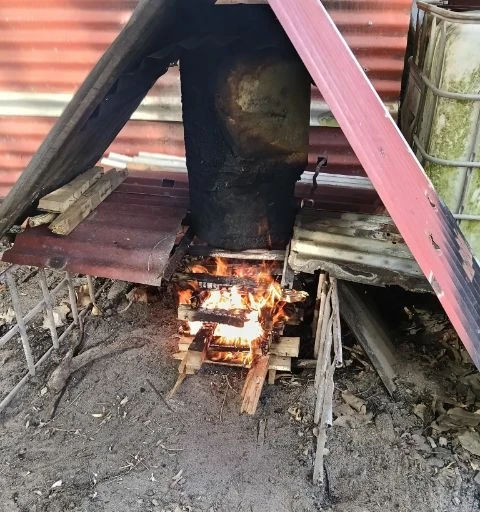
Take my hot water setup, for example. I built a DIY wood-fired water heater out of a salvaged 50-litre electric hot water tank. It works perfectly, but stoking the fire for the hot water system every day takes time and intent. If I want a hot shower after work, I have to plan for it, gather and stack that wood under the heater and get it lit.
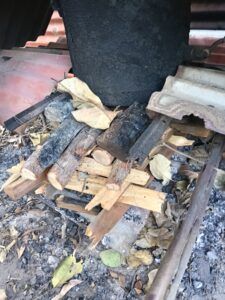
To go with that heater, I use a custom overhead gravity shower. It is a brilliant, low-tech system utilizing a 20-litre water drum rigged to a pair of ceiling pulleys. But the physical process of lowering and filling the shower drum, hoisting it back up into the air, and locking it off on a wall cleat before every single shower is definitely an upper body workout.It makes you value every drop of water, but it is undeniably a chore.
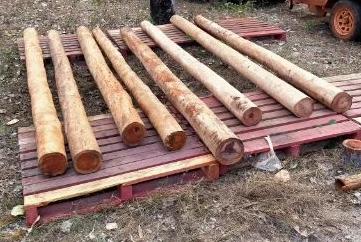
Firewood doesn’t cut itself, either. Even though I use a chainsaw to drop and section log timbers, it is still physically hard work at times to haul, split, and stack the timber.
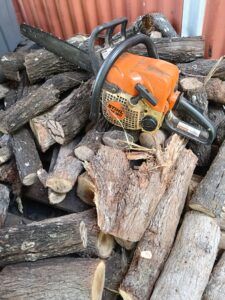
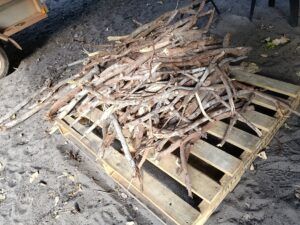
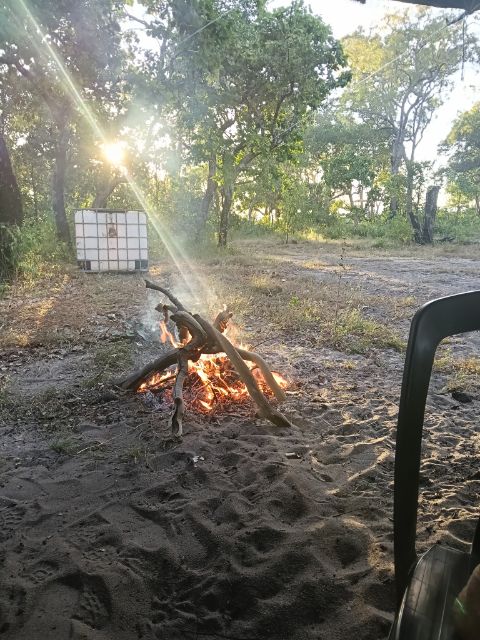
Beyond the heavy logs, there is the daily grind of picking up kindling every day after work around 5:00 PM. When I am completely exhausted from a hard day’s work as a sparkie, the last thing I want to do is to go gather kindling! But those morning and evening fires are non-negotiable; they provide necessary warmth during the chilly evenings and mornings and help keep the mosquitos away as well.
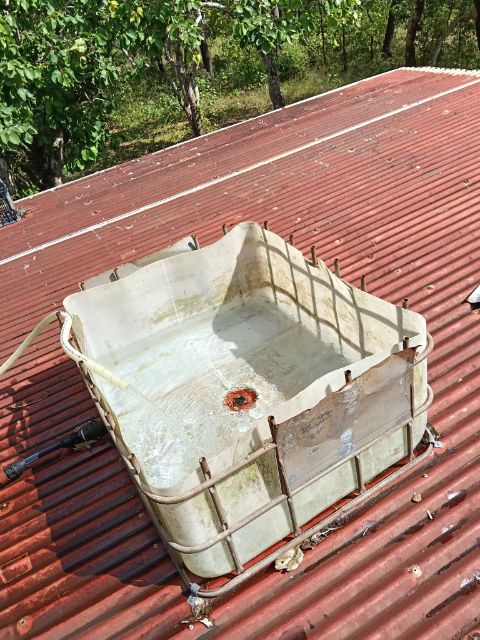
Making sure there is always enough water is a constant task. In the dry season, I have to hitch a 1000-litre poly tank to my box trailer, drive to a public tap at the beach, fill it up over 75 minutes, tow it back, and use a generator-powered pump to move it to my ground and roof storage tanks. In the wet season, I catch the rain off my 60-square-metre roof, which requires keeping the gutters perfectly clear of leaves and debris.
Cooking is another thing you have to monitor. I use a simple 2-burner gas hotplate for quick meals. My 8.5kg LPG bottle usually lasts 2 to 3 months before it goes empty. You have to keep a close eye on it, because making sure my gas bottle doesn’t run out means tracking your usage so you aren’t left with a cold stove in the middle of cooking dinner or boiling a cuppa.
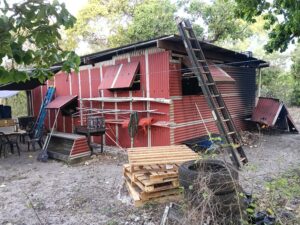
Because my shed is a basic rustic build, it isn’t totally sealed from rodents and insects with fine-grade fly screens. Rodents can and do get in. They usually take off running when they hear me walk through the door, but you have to get used to sharing your space. You will encounter mozzies, flies, bugs, mice, bats, birds, and even horses or other stray dogs roaming nearby. Snakes are around at times as well; they are very shy and typically move away if left alone, but you always have to remember to look at where you are walking.
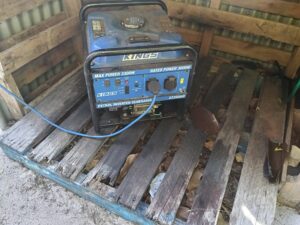
You might think having solar and a backup generator means a permanent, flawless electricity supply, but it’s not always 100% guaranteed power from both sources. You run into issues like running out of petrol for the generator, or experiencing a week of heavy cloud cover where there simply isn’t enough sun to charge the solar batteries correctly.
And then, there is the bathroom situation: I don’t have a flush toilet. There is no sewerage system or septic tank on the property. I will openly admit that I miss the cleanliness and convenience of a standard ceramic flush toilet. I just use the nearest public facility whenever I am near town. If I am out at camp and away from all of that, I use a trusty shovel, some toilet paper, and something simple to sit on. You can use your imagination here—it is simple, but it is definitely a step away from modern luxury!
The Good.

If the “bad” list sounds like a lot of work, it is, because it is a lot of work. But the reason I—and so many others—choose to stay off grid is because the rewards of this lifestyle are deeply fulfilling. Here are some reasons why the daily grind is worth it.
The quiet and solitude you find out here is unmatched. Being away from everybody means you are completely free from traffic, shouting, sirens, and city noise. On quiet nights, I can hear the waves crashing at the beach from my bed. I am surrounded by the sounds of nature, listening to the calls of different birds and the wind through the trees.Living this close to the land forces you to notice the small things in nature. You become highly tuned to the subtle shift of the seasons, the flowering times of the native bush trees, and the wind direction changes that signal the arrival of the monsoonal trough or the dry trade winds.
I don’t need a gym membership when you live in the bush. You get plenty of exercise doing manual chores every single day—whether it is cutting firewood, getting kindling, carting water, raking up leaves, or stoking the hot water heater. It keeps you fit, strong, and active.It really is a form of functional fitness in the truest sense of the term.
Better yet, the cost of living is very low. Because I built my own setup on my own terms, I don’t pay rent, a mortgage, or council rates to any organisation. Once your core solar, water, and shelter systems are established, your weekly expenses plummet. It gives you an incredible sense of financial freedom.
One of the most satisfying feelings is knowing that life is just simple living off grid. When the adjacent town experiences a massive power outage or their water systems fail, it never affects me. My lights stay on, my gravity water keeps flowing, and my wood-fired heater keeps running.
Living on the land makes me more creative, resilient, and abstract in my thinking. You become an expert problem solver because you have to be. When something breaks, you can’t just call a repairman; I am always thinking of a creative solution and a practical way to fix any problem using whatever scrap, timber, or tools you have on hand. One of the most important lessons of bush life is that there is always a solution to everything.You just have to use your head in looking for that solution.
My Best Off Grid Living TipsIf you are looking to make the jump yourself, here are a few of my best off grid living tips to help you transition smoothly:
- Prioritise Your Roof: Whether you are catching rainwater or just trying to stay dry, a leak-free roof is your most important asset. Take extra time to seal every flashing and screw.
- Design for Ventilation: If you are building a uninsulated iron shed like mine, give it a raised roof height (above 2.7 metres) and install large swing-out windows to let the natural trade winds flush out the heat.
- Keep Your Systems Simple: Avoid overly complex electronic pumps or automated gadgets if you can. Gravity-fed water tanks and manual wood-fired heaters have fewer moving parts and are much easier to fix when things go wrong.
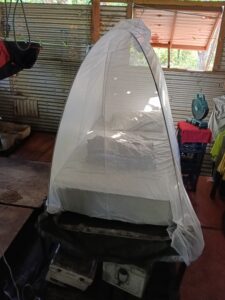
- Protect Your Sleep: Out in the bush, insects are a fact of life. Hang a simple mosquito net directly over your bed frame to ensure you get a peaceful, bug-free night’s sleep.
Living off the grid isn’t a permanent vacation—it is a continuous, hands-on relationship with your environment. There will be days when the wood is damp, the mozzies are biting, and you miss the simple luxury of an indoor flush toilet. But when the sun starts to set, the smell of bush timber begins to drift from the firebase, and you sit down with a hot cuppa and listen to the bush silence.It is a simple, beautiful life, and I wouldn’t trade it for anything.
If you are currently planning your own independent camp or shed setup, I would love to hear about it! What part of the off-grid transition are you most excited or concerned about? Let me know by leaving a comment below, and let’s chat about your building plans, water storage layouts, or solar needs to help you get your project off the ground!

This was such an eye‑opening read. Living in a crowded, busy city, I sometimes catch myself daydreaming about what it would be like to unplug and experience off‑grid life, even just for a couple of days. The way you described both the challenges and the rewards makes it feel much more real, not just the romanticized version we often see online.
For someone who just wants to “test the waters” without committing fully, what would you recommend as a good short‑term off‑grid experience to try first?
Hi Alysana,thanks for your comment here.Maybe start with a weekend out camping with the bare minimum e.g. tent ,food ,water and the ability to make fire and see if you enjoy that.Another suggestion,maybe go homestay with someone for a weekend who is actually living that type of off grid life.Either option will soon tell you if its the life for you without having to spend a tonne of money setting something up.
Thanks for sharing this balanced look at off-grid living. I’ve always thought the idea of being more self-sufficient and living closer to nature was interesting, but I know it’s not as easy as it looks. Your article did a great job explaining both the benefits and the challenges, which gave me a more realistic perspective. I was wondering, if someone wanted to try off-grid living for the first time, what would you recommend they start with before making the full transition? Thanks again for the informative article!
Hi Monica.thanks for your comment here.I would recommend trying the off grid life out as cheaply as possible before diving in and spending money for a set up.You can do this by joining a facebook group with similar interests or even trying camping a few times.Better to find out you wont like it as cheaply as possible before spending the funds to get set up.
As a nature lover who has spent plenty of time in the mountains and outdoors, I recognize the appeal of quiet mornings, practical self-reliance, and the fitness that comes from doing essential work instead of driving to a gym. The honest detail about hauling water, maintaining firewood, and managing insects makes the lifestyle feel far more real than the polished cabin images people see online.
Your simple-systems approach makes a lot of sense, particularly gravity-fed water and repairable equipment. With creek-side living and rainwater catchment, would you also make tank screening, cleaning gutters, and sealing overflows a regular routine (since these steps help keep insects and other contaminants out of stored water)?
Hi Aly,thanks for your comment here.Yes,i dhave precautions around water storage,just as you have described.You can see more detail r.e. these at my post here https://bushsparkie.com/my-wat….Thanks Aly.