The “Ghost” In My Solar Setup.
There is nothing quite like sitting out on the verandah of an off-grid shed after a scorching bush day, watching the sky turn orange, and listening to the hum of a fridge keeping your drinks ice-cold. You look at your solar control panel, see that beautiful, reassuring 100% charged Battery icon, and think, “Yep, we’ve mastered this off-grid living thing.”Then 9:30 PM rolls around.Suddenly, the TV cuts to black. The internet drops out. The fridge falls dead silent, and you are left standing in the pitch black with nothing but a headlamp and a deeply confused look on your face.If you are living the off-grid lifestyle, or planning to make the leap, what I am about to share is one of the most frustrating, deceptive, and common issues you will face with budget-friendly solar setups. It is the story of how my solar display lied straight to my face every single day, why my batteries were secretly starving to death in the middle of a blazing hot sunny day, and the exact upgrade I am installing to fix it.The technical name that can be applied to this article discussing this issue is surface charge voltage spike analysis.
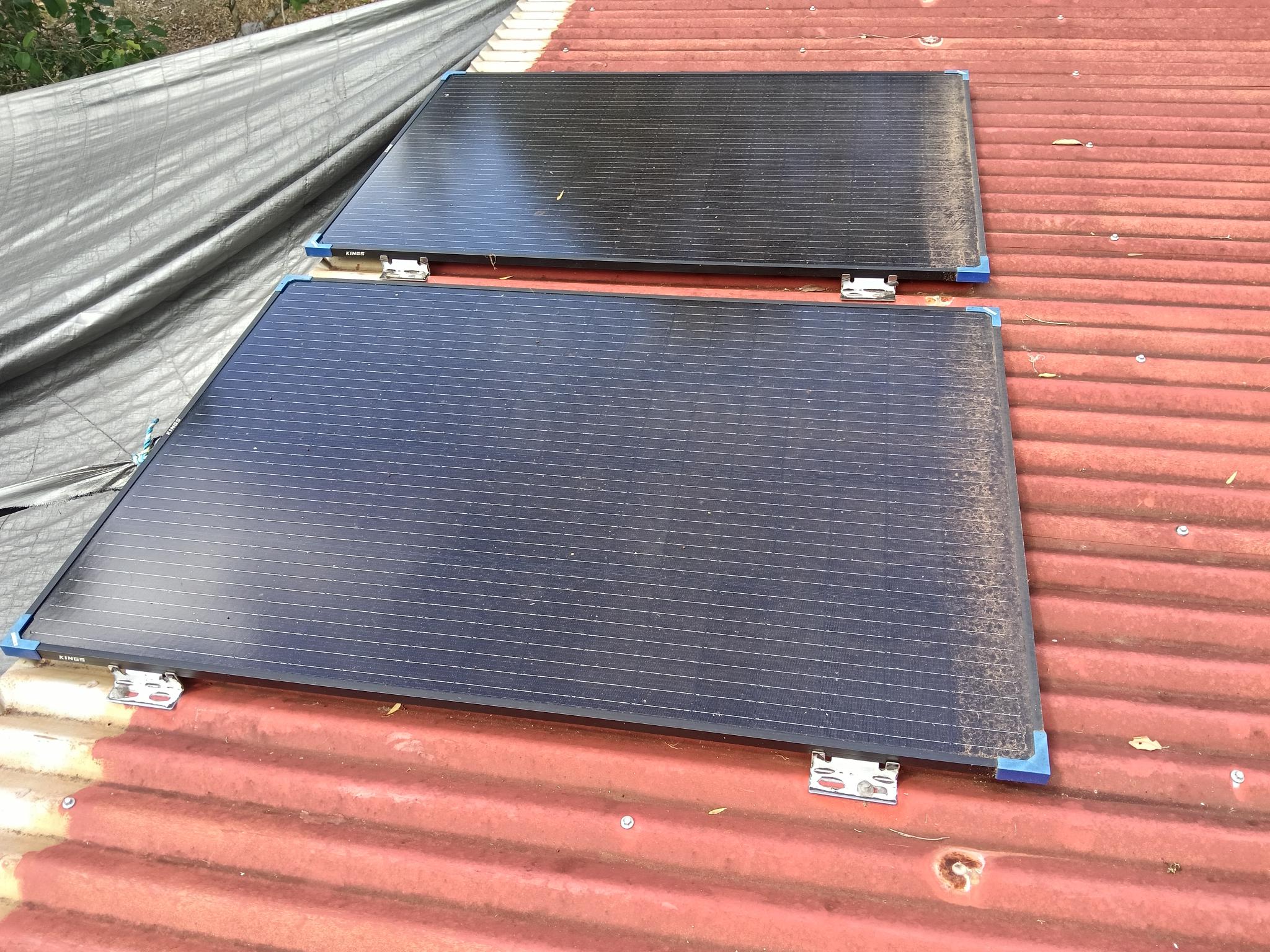
My solar set up.
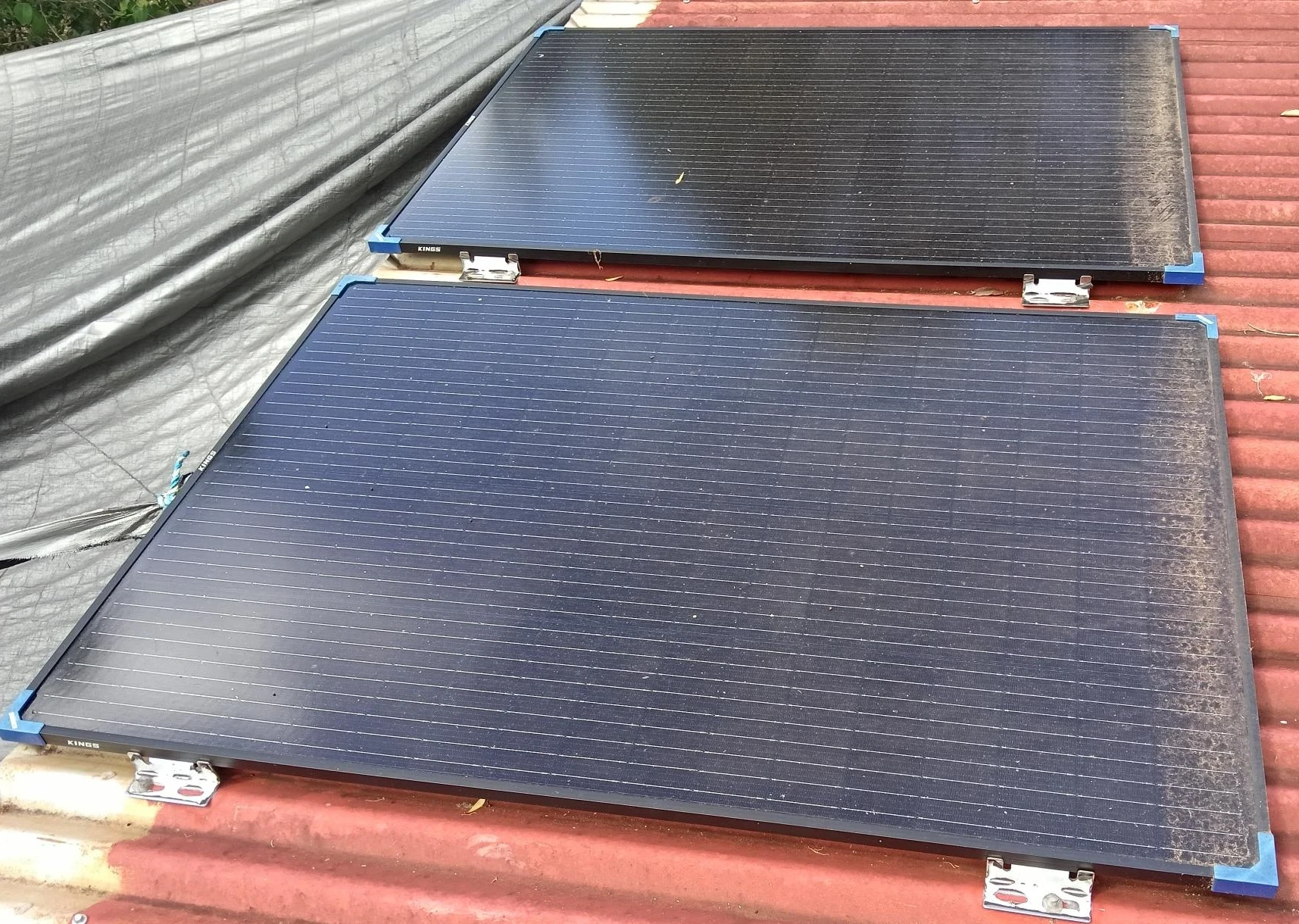
To understand why my power was vanishing into thin air, we have to look at the gear.Hopefully,I can demonstrate in this article a correct example of how to set up solar and battery storage. Like a lot of people starting out or keeping things budget-conscious, I went heavily with Adventure Kings gear. It’s accessible, it’s affordable, and on paper, the maths looked like it should work fine for a simple lifestyle.Here is exactly how the system is currently wired up:
The Solar Harvesting: 2 x 200-watt Kings solar panels, wired in series…which feeds into..
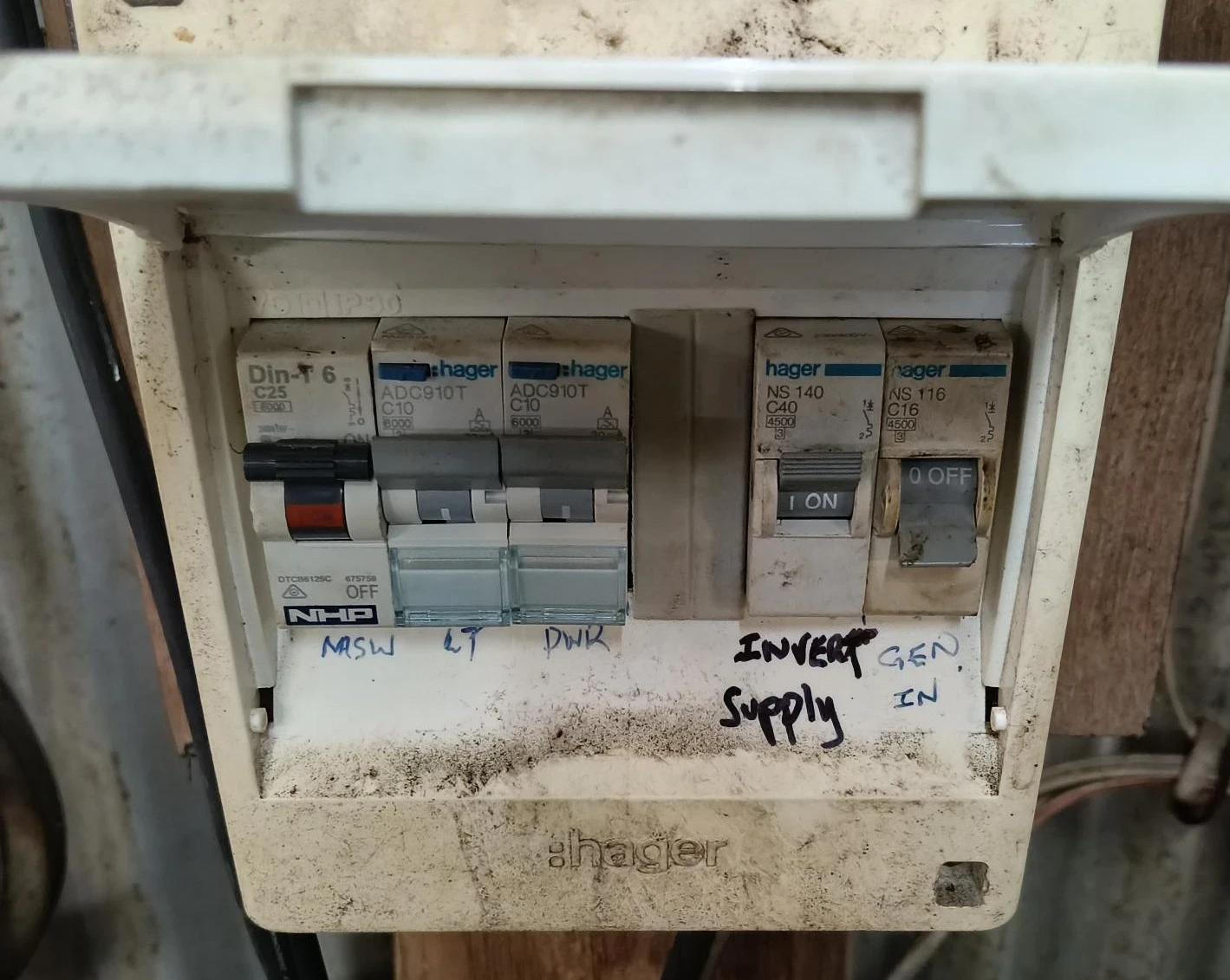
The Brains: A Kings 20-amp MPPT solar charge controller.…which feeds into..
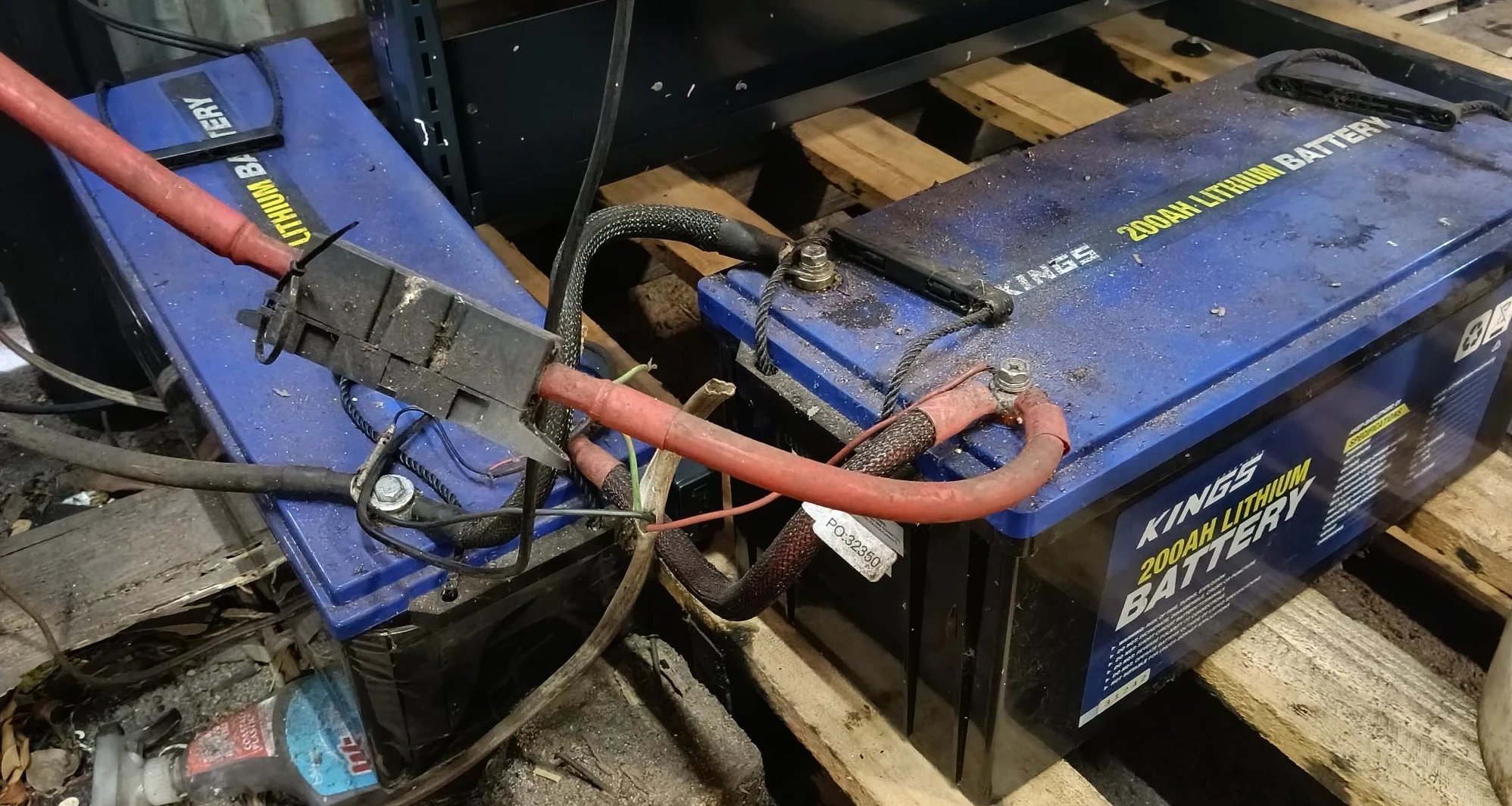
The Power Bank: 2 x 12V 200Ah Kings lithium (LiFePO4) batteries, wired in parallel. This gives me a massive 12-volt, 400Ah battery bank….which feeds into..
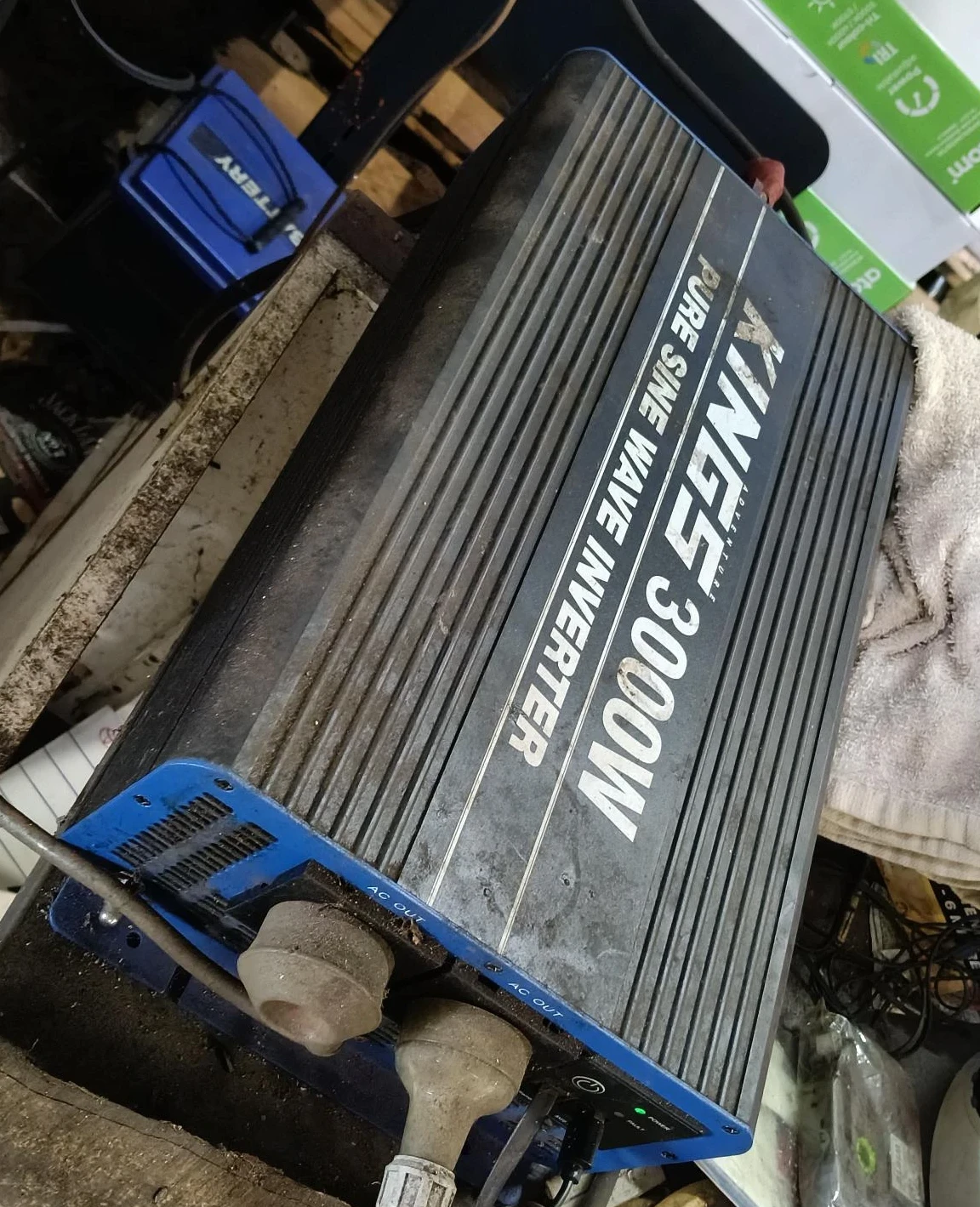
The Muscle: A Kings 3000 KVA pure sine wave inverter
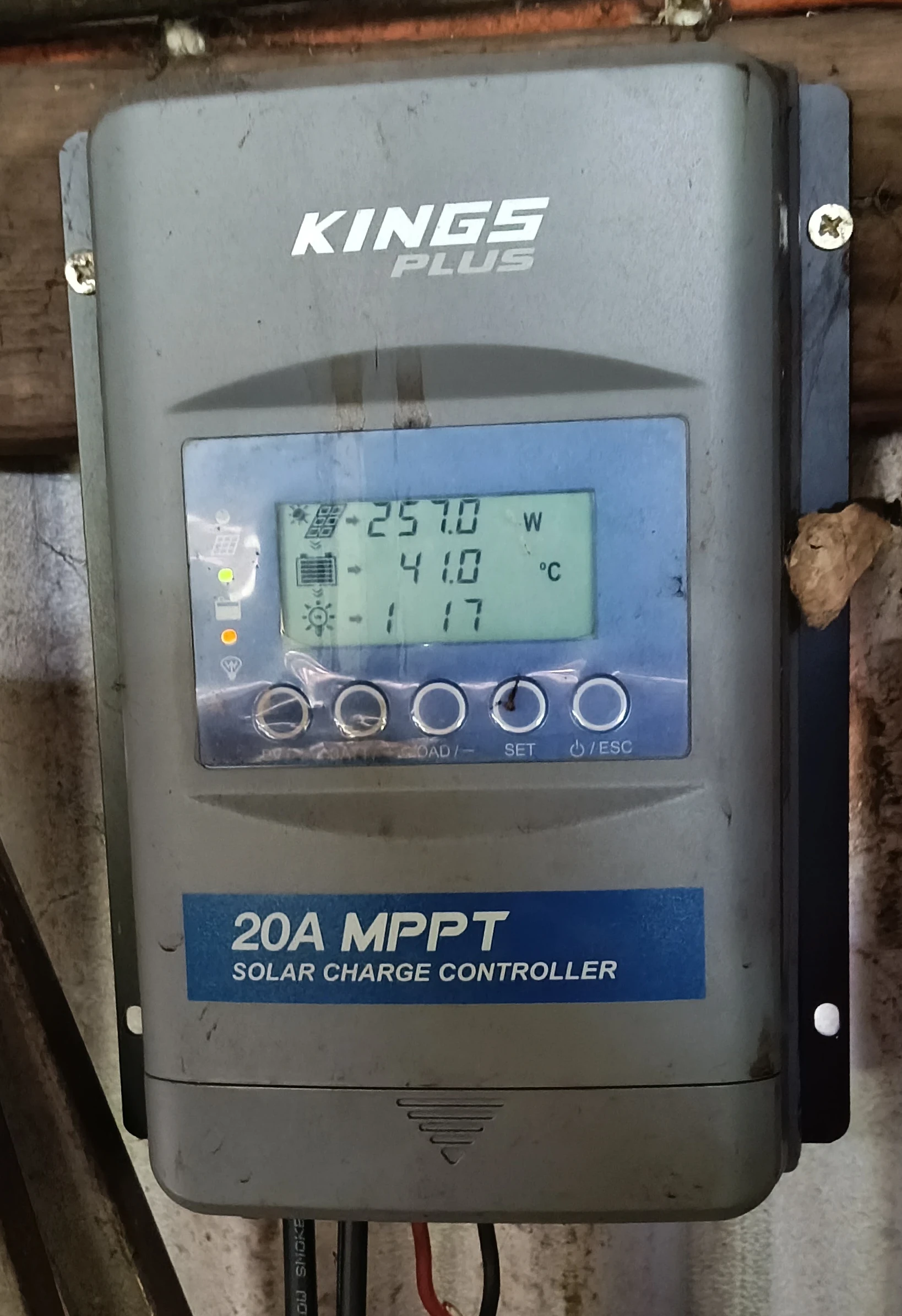
From the inverter, the heavy-duty 240V AC power feeds directly into my shed’s main switchboard. From there, it splits into one dedicated lighting circuit and two standard power point (GPO) circuits. It feels like a real house. It looks like a real house. But as I found out, it wasn’t acting like one after dark.
The evening Power Drain: What Am I Actually Running?
When people hear “off-grid shed living,” they often picture candle-lit rooms and absolute minimalism. But let’s be real—we still want our modern comforts. I am not running a massive air conditioner or a clothes dryer, but my evening power usage isn’t exactly zero either.Once 6:00 PM hits and the sun drops below the tree line, here is everything drawing power in the shed:
- The Fridge/Freezer: A standard 10A, 240V free-standing kitchen fridge. It cycles on and off until I turn it off around 930pm
- The Internet: A standard Starlink dish (the absolute lifeblood of remote work and entertainment, but a notorious power hog drawing a continuous 60 to 70 watts).
- The Entertainment: A 40” LED TV for a bit of wind-down time.
- The Workspace: My laptop plugged in to knock out some work.
- The Lights: 4 x 36-watt LED batten lights. They make the shed nice and bright, but combined, they pull over 140 watts an hour!
- The Workshop Charging: Two power points used for charging phones, LED headlamps, and crucially, two 18V Makita battery chargers for my cordless tools.
When you add up the power draw of the fridge cycling, the Starlink dish running continuously, the bright lights, the TV, and those thirsty Makita fast-chargers, the shed can pull roughly up to 700 watts of continuous power in the evening.If my 400Ah lithium battery bank was truly at 100% capacity, it would hold around 4,800 watt-hours of energy(ah to wh =ah x rated system voltage i.e. 400 x 12=4800) Pulling 700 watts an hour means my system should easily cruise through 6 or 7 hours of evening use without a sweat. So why was my system completely flatlining by 9:30 PM?
The Big Lie: Beware of the “Ghost” 100% Reading
For weeks, I watched my solar controller screen hit “100%” by mid-afternoon. I assumed the lithium batteries were completely packed to the brim with energy. But I was being tricked by a phenomenon known as a surface charge voltage spike.Lithium batteries have a very flat voltage curve. To charge a 12V lithium battery, your solar controller needs to push power into it at around 14.4 volts. Here is where my system hit a massive structural bottleneck: my 20-amp solar regulator.Mathematically, a 20A controller outputting power at roughly 13.5V to 14V can only ever deliver a maximum of 270 to 280 watts of actual power into a battery bank. Even if my two 200W solar panels (400W total) were performing perfectly in the blazing bush sun, the 20A controller was acting like a pinched garden hose.
It physically could not transfer all that energy.Because the controller was maxed out and working under high pressure all day, it created an artificially high voltage reading at the battery terminals. The control panel saw that high voltage and falsely assumed, “Hey, the battery voltage is up to 14V, we must be at 100%!”In reality, my massive 400Ah battery bank was only getting a slow, restricted trickle. Over a standard 6-hour sunny day, that bottlenecked controller was only putting about 1,600 watt-hours of total energy into the batteries. Out of a 4,800 watt-hour capacity, my batteries were only ever 33% full, despite what the lying digital screen told me! No wonder they died after 3.5 hours of running the Starlink and other appliances at night!
The Solution: Open the Solar Floodgates
Now that I’ve diagnosed the problem, the solution is clear, and it’s time for an upgrade. To actually fill a 400Ah lithium battery bank and enjoy uninterrupted power past 9:30 PM, I need to do two things: harvest more raw sunlight and replace the bottleneck.Here is the plan for the upgraded system:
1. Doubling the Solar Input
I am adding another two 200-watt solar panels to the roof, bringing my total array up to 4 x 200W panels (800W total). By wiring all four panels in series, the voltage coming down from the roof will increase significantly. Higher voltage travels more efficiently down the cables, suffers less power loss, and kicks the charging cycle into gear much earlier in the morning.
2. Upgrading to a 40A MPPT Regulator
To handle the extra power, the tiny 20A regulator has to go. I am swapping it out for a heavy-duty 40-amp MPPT solar charge controller. Doubling the amperage capacity means the controller can now comfortably deliver up to 540 watts of continuous charging power into the battery bank.
[ Current System Bottleneck ]
400W Panels ──> [ 20A Controller ] ──> Only 270W Max to Batteries (33% Charged)

[ Upgraded System Flow ]
800W Panels ──> [ 40A Controller ] ──> Full 540W Max to Batteries (100% Charged)
With 800 watts of panels on the roof feeding into a wide-open 40A MPPT controller, my system will finally be able to harvest between 3,500 and 4,000 watt-hours of real energy on a standard sunny day. That is more than enough to completely fill the lithium batteries to a true 100% capacity, leaving plenty of surplus power to run the fridge and charge my Makita batteries during daylight hours.
The Lessons Learnt
Living off-grid is a constant learning curve. It forces you to move away from taking anything for granted e.g. water,electricity etc.The lessons i have learnt from this issue are as below.Hopefully,they can be free ones to you so you dont do the same as i have done here:
- Never trust a basic voltage-based battery percentage display while solar panels are actively charging. If you want to know your true battery state of charge, check it first thing in the morning before the sun hits the panels, or invest in a proper shunt-based battery monitor.
- Match your controller to your battery size, not just your panels. A 20A controller is completely fine for a small 100Ah camping battery, but it is woefully inadequate for trying to fill a massive 400Ah homestead setup.
- Verify,verify,verify.When buying solar panel and batteries,don’t assume that the people selling you the stuff,know 100% what they are talking about.Verify it for yourself as best you can through other sources e.g. online,friends or family that may have a professional background relevant to your issue etc.
I hope you,the reader, were able to learn some valuable lessons from my mistakes here.If you did,please feel free to comment below on anything you wish to discuss r.e. this article,thanks.